Kongsberg Maritime’s Kamewa waterjets power the Watercat 2000 Patrol vessels

In partnership with Kongsberg Maritime, Marine Alutech is helping navies and coast guards meet growing global challenges to maritime security. 

  • Craig Taylor
    Senior Manager PR & Communications

For more than 30 years, Marine Alutech has been synonymous with advanced naval craft designed for demanding missions worldwide.  
From its base in Teijo, Finland, the company has grown into a global specialist in high-speed aluminium and composite boats for defence, security and safety authorities.  


Today, as a major customer for Kongsberg Maritime’s Kamewa waterjets, Marine Alutech is a trusted partner for navies and coast guards, delivering versatile Watercat® vessels that combine proven performance with cutting-edge technology, true to its ethos of Securing Seas. Together. 
Marine Alutech’s transformation over the past decade is striking. Since 2015, the company has increased its workforce fivefold and achieved an annual turnover of around €50 million. Export accounts for roughly 60 per cent of business, supported by Finland’s NATO membership, which has opened up new opportunities and improved collaboration. 

“Being part of NATO changes the dynamic,” says CEO Niko Haro. “We have greater openness in discussions and access to programmes across allied nations. It’s a two-way street. Finland benefits from shared expertise, and we contribute our experience in specialised craft for coastal defence.” 
Global naval priorities have shifted rapidly since Covid-19 and the war in Ukraine. Defence budgets are rising, but resources, especially skilled personnel, remain tight. Customers want proven designs delivered fast, with enhanced performance and integrated technology. 


“Navies aren’t asking for radical new concepts,” Niko explains. “They need vessels quickly, based on platforms that work. At the same time, requirements are increasing – more electronics, more automation and higher speeds.” 
Speed is a critical factor, particularly in regions such as the Mediterranean, where smugglers often operate at 60 knots using high-powered outboard engines. “Coast Guard vessels at 50 knots can’t catch them,” Niko notes. “Surveillance and interdiction strategies are evolving, but speed remains a decisive capability.” 
This demand drives innovation in hull design, propulsion systems and weight management. “Every kilo matters,” Niko says. “Customers add more gear, ballistic protection and electronics, which impacts upon displacement and speed. Balancing these factors is a constant challenge.” 
“Navies aren’t asking for radical new concepts. They need vessels quickly, based on platforms that work”

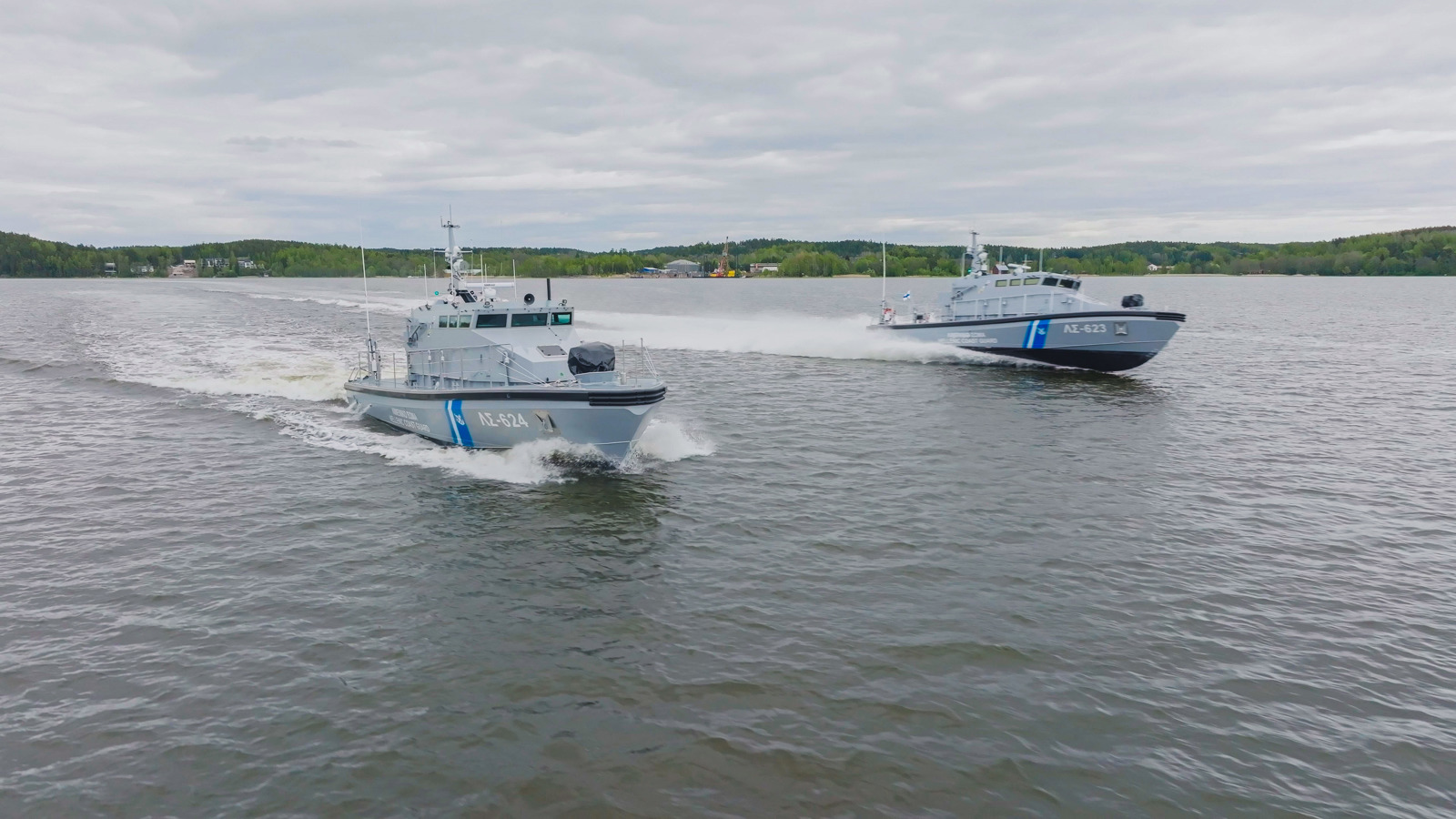
A Watercat M12 vessel on patrol 

Marine Alutech’s production reflects a major shift in naval architecture: the rise of electrical and automation systems. “Ten years ago, boats were purely mechanical,” he says. “Today, if you lose electricity, nothing works. We now employ more electricians in production and our design team is focused on electrical and automation. The balance has changed.” 
This expertise in combining aluminium hull construction with advanced electrical systems is a core strength.  


At the heart of Marine Alutech’s high-speed craft is the waterjet, a core technology where Kongsberg Maritime plays a vital role. “The Kamewa waterjet is a proven product,” Niko says. “But every programme demands optimisation. We work closely with Kongsberg Maritime on hydrodynamics to achieve the speed and performance our customers expect.” 


Collaboration extends beyond product selection. “We plan the entire life cycle,” Niko explains. “Corrosion resistance, reliability and cost-effectiveness are critical. Customers compare life cycle costs, so we need to present the most sustainable solution.” 

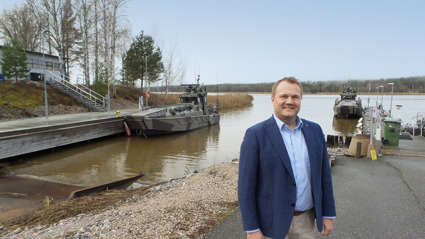
Marine Alutech CEO Niko Haro 


Speed requirements continue to rise. Niko says: “Customers want more speed, but it’s not just about raw power. We look at hull design, displacement and propulsion efficiency. Increasing engine power doesn’t always mean a bigger jet, it’s about matching power and displacement to achieve the right balance.” 


As vessels become more complex, life cycle support is essential. “Customers need more than maintenance, they need upgrades and technical assistance,” he says. Marine Alutech provides service agreements and works with Kongsberg Maritime to ensure global support for waterjets. 


“Our relationship with Kongsberg Maritime can be described as a partnership more than a supplier-customer role,” adds Masi Määttälä, Kongsberg Maritime’s Sales Director – Waterjets. “We have been part of many projects and programmes together over decades, delivering more than 500 waterjets. Collaboration is a key part of our success.” 


Marine Alutech’s order book reflects strong demand. The Finnish Navy remains a cornerstone customer, alongside significant programmes for the Dutch Navy and Hellenic Coast Guard. “We’ve expanded from four to seven production lines,” Haro says. “We’re delivering a record number of vessels this year.” 


Marine Alutech’s success is rooted in collaboration, with customers and with technology partners such as Kongsberg Maritime. “Strong partnerships help us deliver proven solutions faster, meet demanding performance targets and support customers throughout the life cycle,” Niko concludes.