Cool technology delivers polar performance
By collecting real-world data from embedded propeller sensors, Kongsberg Maritime aims to redefine global ice-class propulsion standards.
-
Craig TaylorSenior Manager PR & Communications
Sensor technology is embedded in a propeller
At the heart of the propulsion system is Kongsberg Maritime’s Promas solution, a five‑blade controllable pitch propeller (CPP) optimised for ice milling and integrated with a hydrodynamic rudder profile. For the trial, engineers installed strain gauges inside one stainless‑steel blade to measure forces encountered under true Antarctic conditions. The installation was carried out at Kongsberg Maritime’s propulsion facility in Kristinehamn, Sweden, where recesses were milled, two gauges were embedded and welds were executed to withstand the rigours of repeated ice contact.
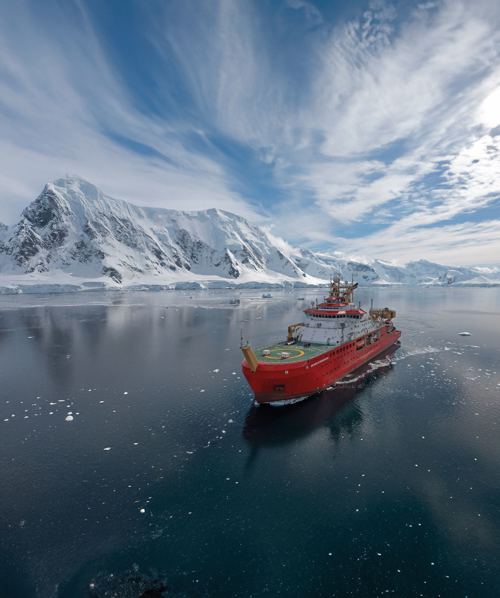
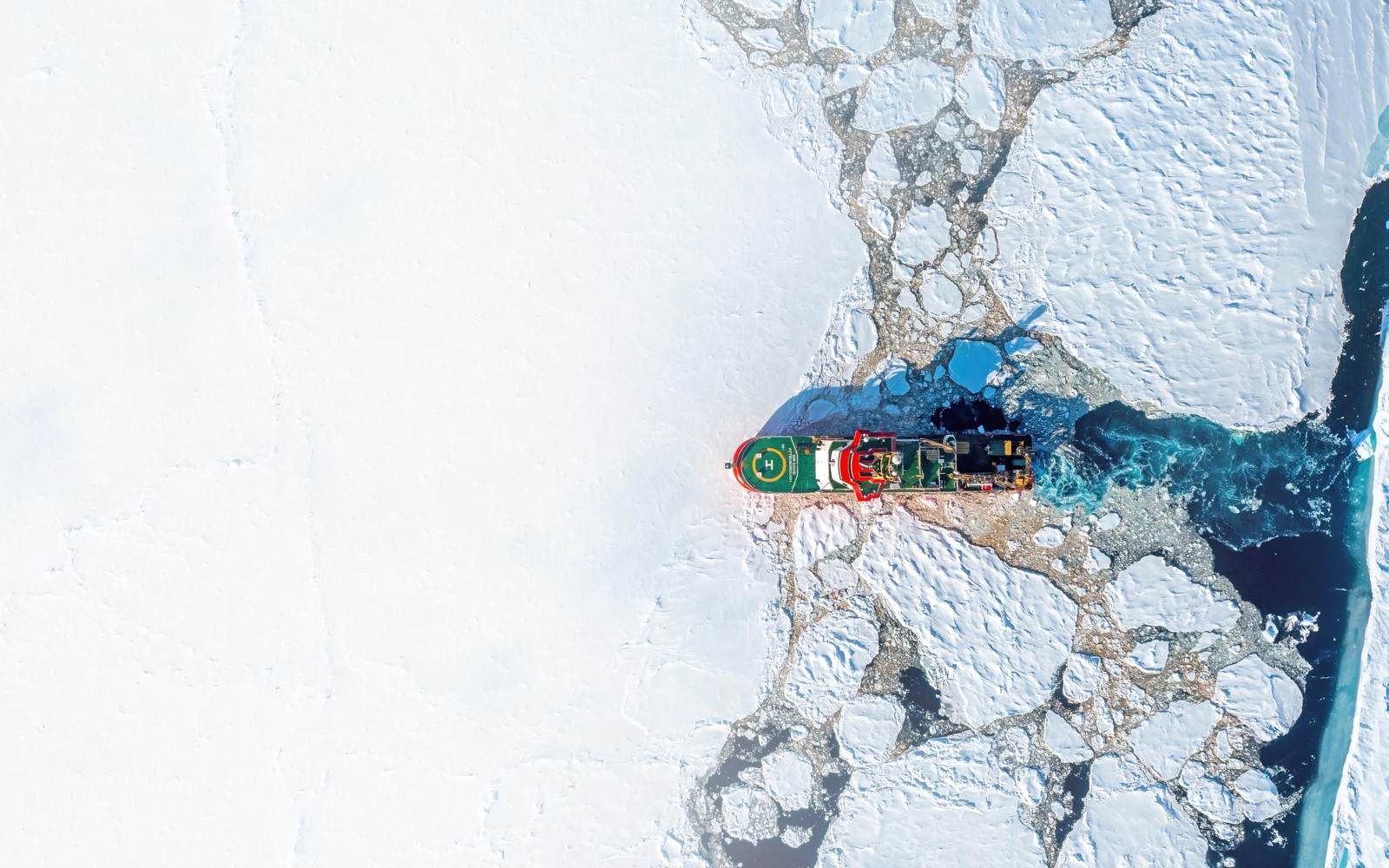
The programme focused on the Weddell Sea, with test sites around James Ross Island and the eastern Antarctic Peninsula, areas influenced by the Weddell Gyre’s ‘conveyor belt’ of sea ice. Divers entered the water via a tethered cage lowered over the stern and connected to a port at the blade root to download data and recharge the instrumentation. With an eight to 10-hour battery window, dive operations took place twice daily. The ship was exercised in two principal regimes: level fast ice (attached to the coast and stationary) and large floes with pressure ridges formed by wind and current. Turning manoeuvres in fast ice and controlled “glancing blow” passes at floe edges added complementary hull‑pressure data.
BAS and partner teams combined multiple measurement streams. In addition to the instrumented propeller and strain gauges on the propeller shafts, borescopes captured imagery of ice moving under the hull, and hull‑mounted pressure sensors logged contact events. Aker Arctic Technology led the ice trials, drawing on its experience in polar vessel performance. Lloyd’s Register provided strain‑gauge and borescope systems, while the American Bureau of Shipping (ABS) Canada contributed lidar, camera and thermal imaging to characterise ice conditions in real time. BAS specialists coordinated operations, using satellite and drone imagery to select optimal sites and quantify ice properties – thickness, salinity, temperature and crushing strength – before, during and after transits.
The objective was to validate propeller performance under representative ice loads and to understand whether operating approvals could, in the future, be extended to higher ice classes. The measurements also informed optimal pitch strategies in varying ice types, promising gains in safety, efficiency and fuel use. For BAS, the potential benefits included shorter transits, wider operating windows and more resilient science scheduling.
Chris Hall, Kongsberg Maritime’s Senior Hydrodynamicist, was onboard and analysed datasets daily. He says: “We’ve spent decades refining ice-class propulsion systems, and this trial aboard the [RRS] Sir David Attenborough was a unique opportunity to validate that expertise in some of the most demanding conditions on Earth. By capturing real-world data on how propellers interact with sea ice, we can push the boundaries of vessel performance and safety in polar regions. The insights gained here could transform how ships operate in ice, improving efficiency and resilience for future generations of polar research and commercial vessels.”
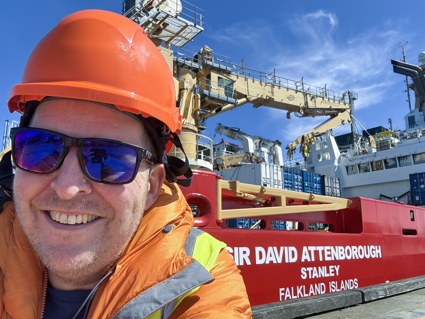
Chris Hall