The Reach Remote project is changing the future of shipping by delivering uncrewed vessels that can be deployed around the world. It’s a proud achievement for the people at Kongsberg Maritime.
Text:Global Marketing and Communication
Photo:@Kongsberg Maritime
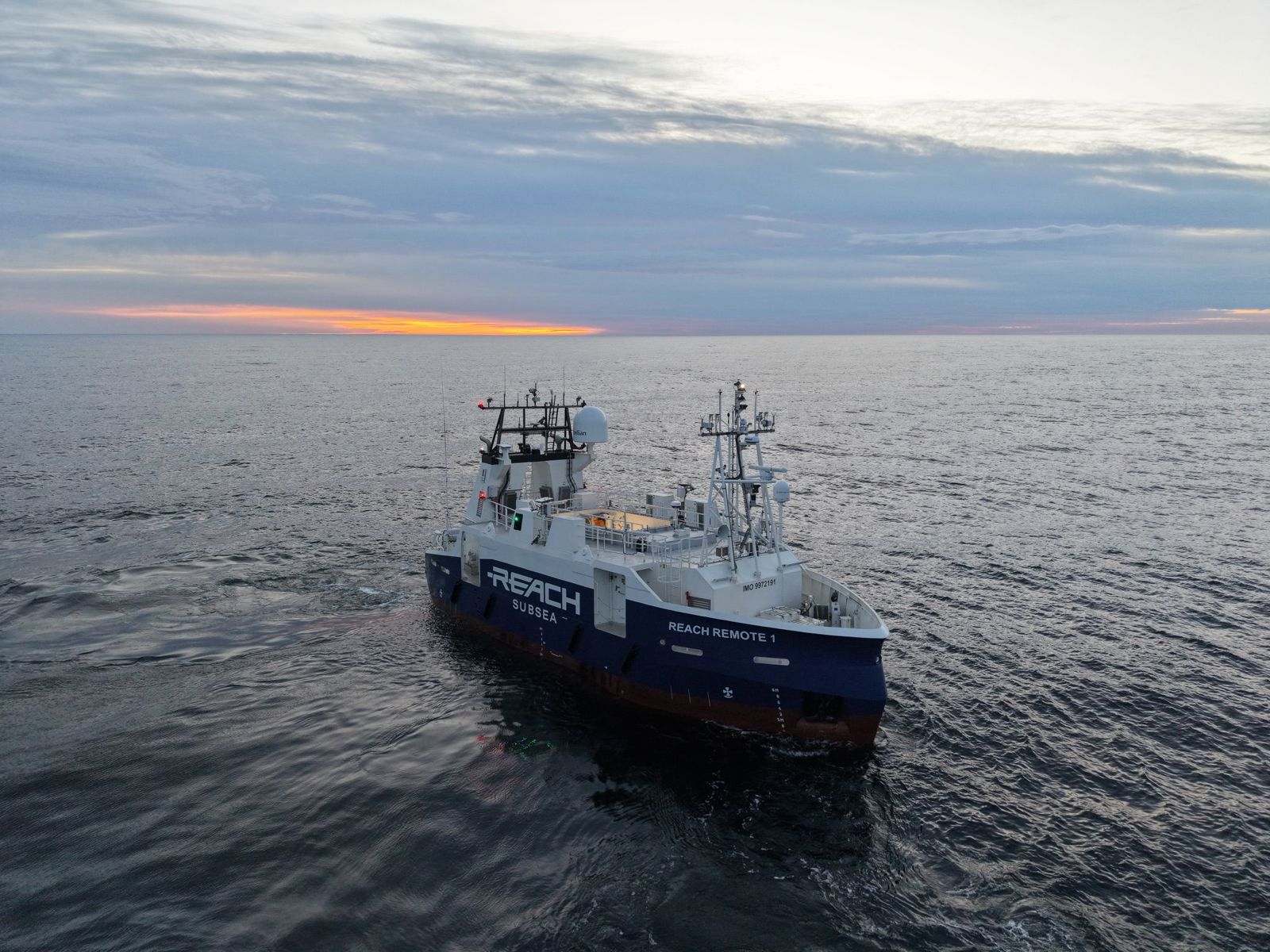
When Reach Subsea launched its pioneering Reach Remote project, the vision was clear: transform subsea operations through uncrewed, remotely operated vessels. That vision is now a reality that’s helping to shape the future of offshore operations.
From the first commercial deployments of Reach Remote 1 in the North Sea to the recent arrival of Reach Remote 2 in Australian waters, the project has achieved milestones that are redefining what’s possible in marine operations.
Supported by Kongsberg Maritime’s advanced technology and vessel design, Reach Remote is proving that remote and autonomous operation at sea is not just viable, but is efficient, sustainable and ready to scale up.
Reach Remote 1’s debut year was marked by a series of successful campaigns demonstrating the vessel’s capabilities in real-world conditions. The highlight was a reservoir survey for Shell at the Ormen Lange field, a complex operation that showcased the vessel’s ability to deliver high-quality surveys. Additional projects followed, including an IMR (Inspection, Maintenance and Repair) campaign for Equinor and an assignment for TotalEnergies. Most tasks focused on survey and non-contact inspection, though intervention work was also trialled during pilot phases.
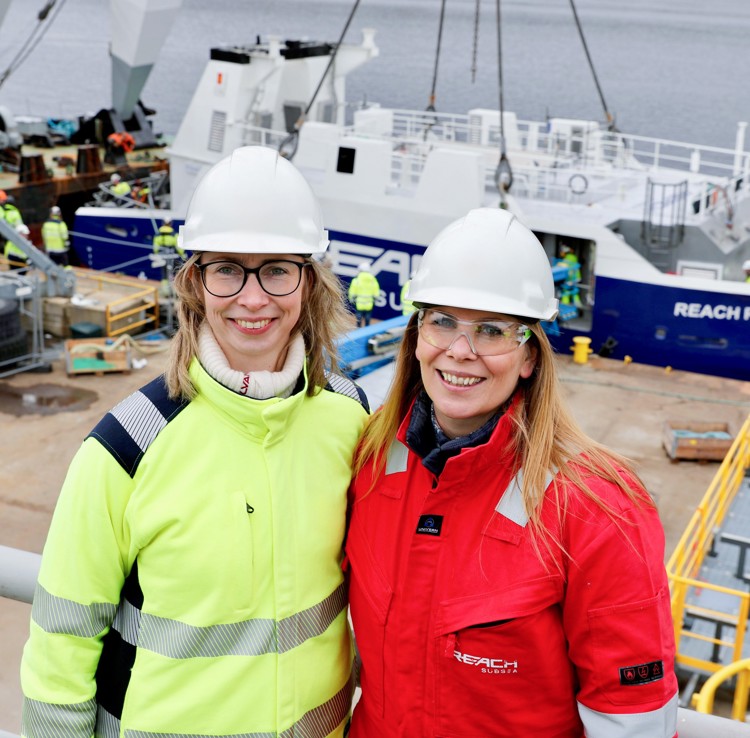
“The biggest learning curve has been how to organise ourselves around this new asset,” says Bjørg Mathisen Døving, Reach Remote’s Vice President.
“We’ve had to rethink logistics, from containerised support systems to multi-location coordination. It’s a different mindset when your vessel is hundreds of kilometres offshore with no crew on board.”
Marthe Kristine Sand, left, and Bjørg Mathisen Døving
To manage this complexity, Reach Subsea developed Reach Horizon, an in-house digital platform that streams live video, sensor data and operational logs from the vessel to stakeholders worldwide.
“It’s a collaborative tool that gives everyone, from pilots to client, real-time insight into what’s happening offshore,” Bjørg explains.
Operationally, Reach Remote 1 has performed well, though not without minor challenges. Connectivity was occasionally disrupted, because of seagulls nesting on the Starlink antennas.
“These are the kinds of issues you only discover through real-world experience,” she says. “From a client perspective, the vessel has delivered exactly what it promised.”
A regulatory milestone: Sailing solo
Perhaps the most symbolic achievement of 2025 was Reach Remote 1’s ability to operate without an assisting vessel. “Removing the support craft was a hard-fought victory,” says Bjørg. “The Norwegian Maritime Authority [NMA] required extensive reporting and risk assessments before granting approval. Seeing Reach Remote 1 depart Kristiansund solo was an emotional moment for the team.”
For Marthe Kristine Sand, Kongsberg Maritime’s Project Manager, the milestone highlights the project’s disruptive potential. “Operating without a support vessel demonstrates how groundbreaking this technology is,” she says. The fact that the Reach Remote now operates on its own has impressed many. The technology that we’ve developed to make remote and autonomous operations a reality is the backbone of these vessels. And this milestone wasn’t just a technical achievement, it was a regulatory breakthrough.
“For the Kongsberg Maritime team it has been an exciting journey, from a project that started as a research programme and continued into delivery and now into operations. It’s a really proud moment for everyone involved,” Marthe says.
Australian adventure
While Reach Remote 1 was making headlines in Norway, its sister ship was preparing for a new frontier. Reach Remote 2 is now in Australia, reflagged under the country’s registry and cleared for operations following successful client acceptance tests. Since its first deployment in December 2025, the vessel recently completed a further 26-day remote operation offshore.
“This was a significant moment,” continues Bjørg. “We’ve proven the concept in the North Sea and now we’re demonstrating its global applicability. Number 2 performed a gWatch reservoir campaign for Woodside’s Scarborough field, the same type of work we completed for Shell at Ormen Lange.”
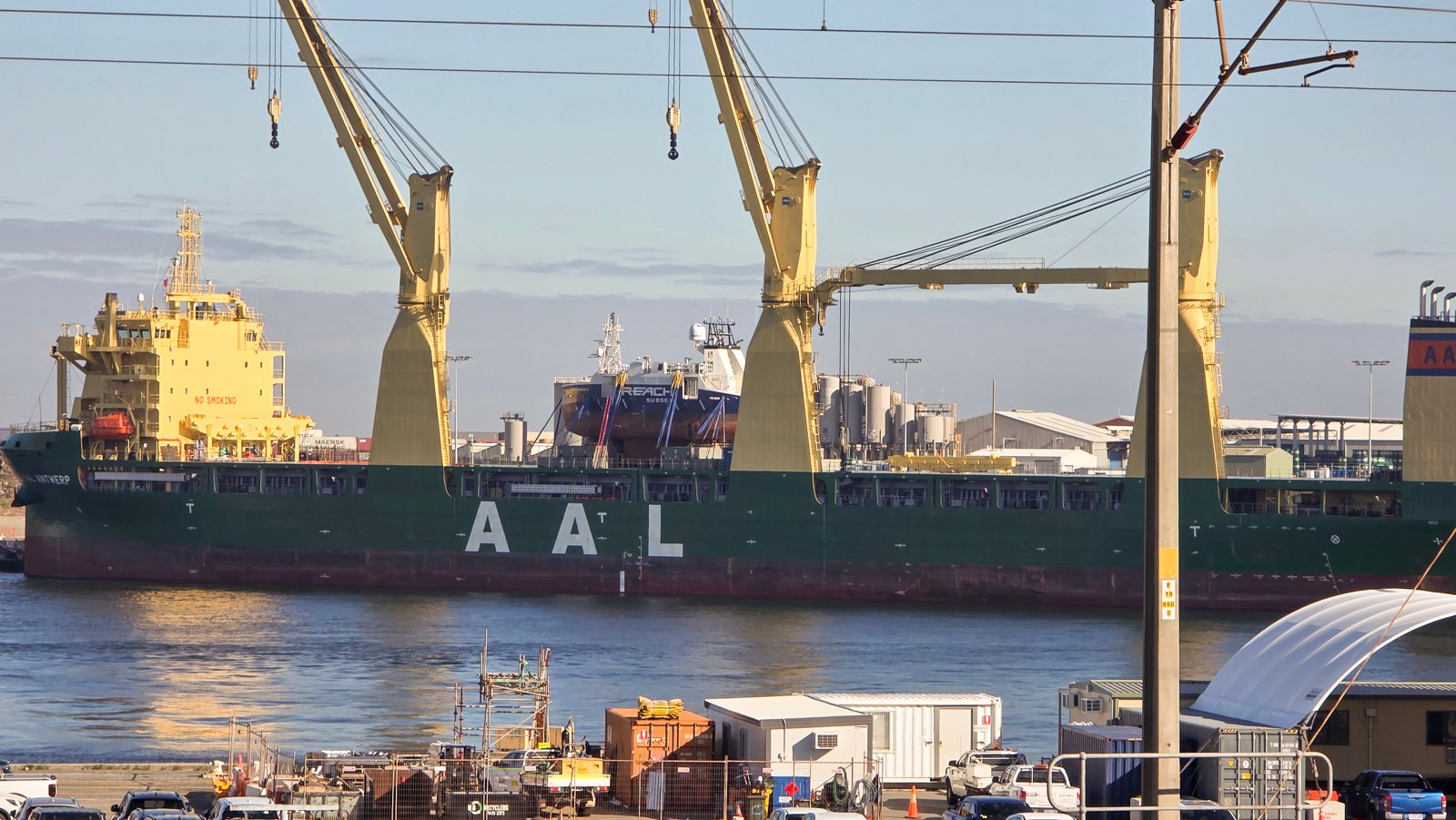
Reach Remote 2 arrives down under in Perth, following its voyage from Norway with AAL Shipping
Australia represents a strategic opportunity for Reach Subsea. Local clients are mature in adopting uncrewed technology, and the assembled team brings deep expertise and strong industry connections. “We’re building towards a permanent presence in the country,” Bjørg confirms. “The interest from clients is high, and the USV’s deployment is just the beginning.”
Beyond Norway and Australia, Reach Remote is next looking towards the UK. “We’re actively working with UK authorities to explore how Reach Remote can operate in British waters,” Bjørg reveals. “The North Sea is essentially a shared environment and opening up UK opportunities is a natural next step.”
This effort is supported by broader collaboration among European nations. The UK, Norway, Denmark, the Netherlands, Belgium, France and Germany have signed a memorandum of understanding (MOU) aimed at creating a pathway for remote and autonomous vessel operations, where Kongsberg Maritime representatives are playing a vital role as advisers to the national regulators. “These discussions are critical,” says Bjørg. “They will determine how quickly we can scale operations across borders. We’re using Reach Remote as a real-world asset to help shape these frameworks.”
Fleet growth and future vision
The success of the early missions has accelerated Reach Remote’s expansion plans. Orders for Reach Remote 3 and 4 are confirmed (see panel below), supported by European funding, marking the transition from prototype to series production of Kongsberg Maritime’s UT 5208 USV design. “We’ve proven the business case,” says Bjørg. “Now it’s about scaling up. More vessels mean greater efficiency and resilience, enabling simultaneous projects across regions.”
The long-term vision is ambitious: a global ‘follow-the-sun’ model, with vessels operating across oceans and regional ROV control centres eliminating night shifts. “Our ultimate target is a fleet operating freely on the seven oceans,” she explains. “Worldwide operations, managed seamlessly across time zones, that’s where we’re heading.” Reach Remote has certainly moved beyond proof-of-concept. It’s delivering real-world value, reshaping offshore operations and setting new standards for autonomy at sea.
The future, now
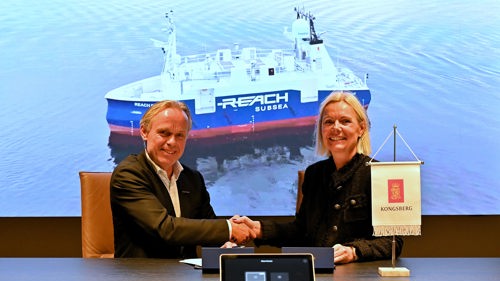
Kongsberg Maritime has signed a contract to deliver two more Uncrewed Surface Vessels (USVs) to Reach Subsea, expanding the pioneering Reach Remote fleet. The move follows the success of Reach Remote 1 and 2 and confirms the viability of large-scale remote and autonomous offshore operations. Lisa Edvardsen Haugan, Kongsberg Maritime’s President, said: “This contract reflects a growing industry confidence in our remote and autonomous technologies. The success of Reach Remote 1 has proven that remote operations are not only viable, but they’re also transformative. By delivering these vessels, we ensure seamless integration of our advanced systems and a streamlined path to deployment. The Reach Remote 2 concept is not just a technological achievement; it’s a glimpse into the future of offshore operations.”