Kongsberg Maritime is proud to be a partner in an innovative offshore gas extraction project that is setting new standards in reliability and efficiency.
-
Text:Global Marketing and Communication
Photo:@Kongsberg Maritime
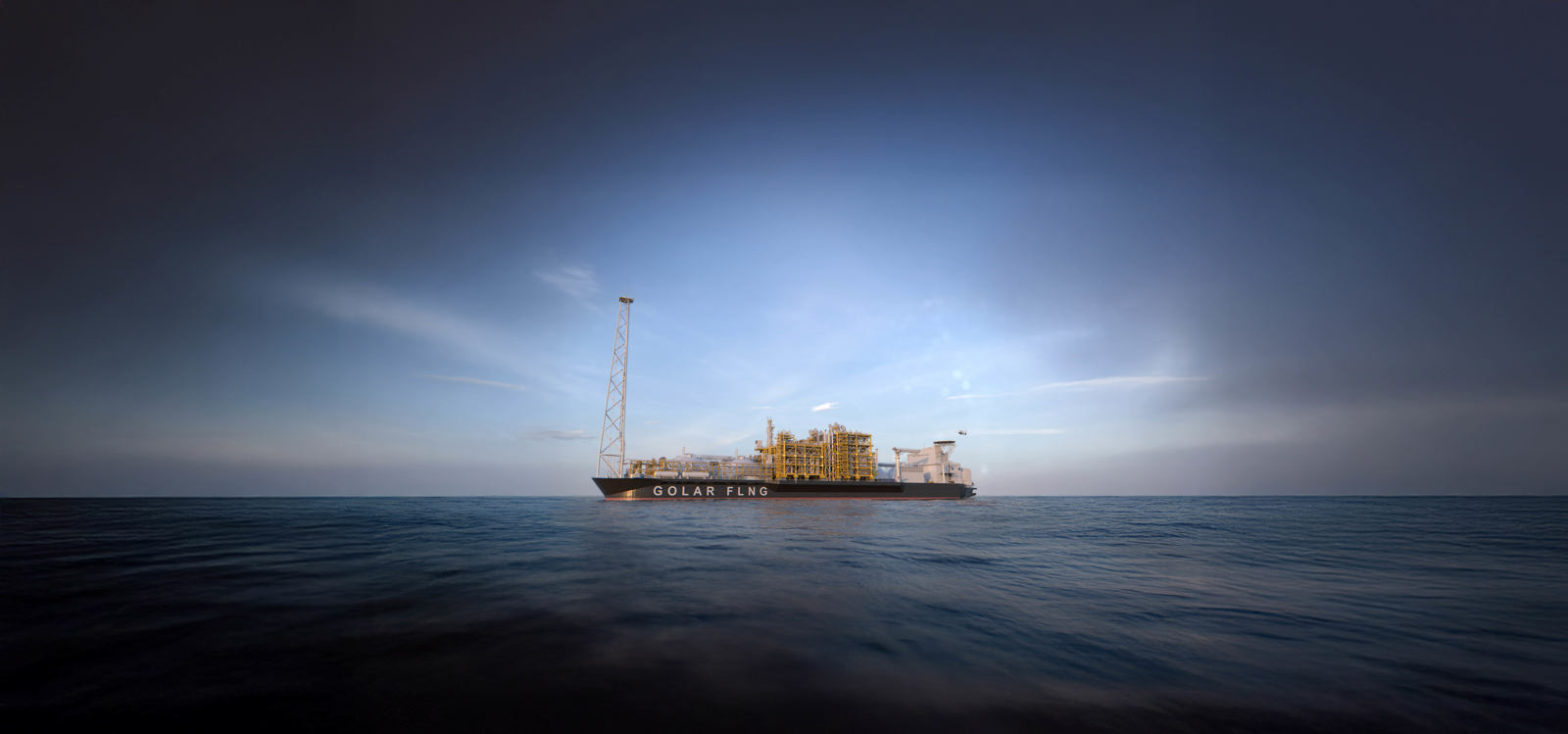
Golar LNG is redefining the offshore energy landscape with its pioneering Floating Liquefied Natural Gas (FLNG) technology. At the heart of this transformation is the company’s MkII FLNG project, a bold, complex, engineering feat that builds on the success of its first and second FLNG units, the Hilli Episeyo FLNG and the Golar Gimi FLNG. With Kongsberg Maritime as a key technology partner, the MkII project is setting new standards in offshore gas extraction.
“Golar is the only proven provider of liquefaction as a service,” says Morten Skjong, Golar’s Chief Technical Officer. “We design, build and operate floating liquefaction, storage and offloading units.” This model enables countries with limited infrastructure to monetise offshore gas reserves by exporting LNG directly from the field, without the need for costly onshore facilities.
Golar’s first FLNG unit, Hilli, proved the concept. Converted from an LNG carrier, it enabled Cameroon to become an LNG exporter and is now preparing for redeployment to Argentina. “We’ve learned a lot from the Hilli,” says Bojan Cicovic, Golar’s Senior Engineer. “It was the first FLNG built from an old LNG carrier and it proved the concept.”
The MkII FLNG project builds on these lessons. The vessel is being converted from the LNG tanker Fuji LNG. The 290-metre ship is being lengthened by nearly 100 metres at the CIMC Raffles shipyard in Yantai, China.
The result will be a next-generation FLNG unit which will increase Golar’s total liquefaction capacity by about 70 per cent, increasing capacity from 5.1 to 8.6 million tonnes per annum. “It’s a $2.2 billion investment and our biggest project yet,” Morten adds.
The FLNG concept is something of an engineering marvel. “Space is a major constraint,” Morten explains. “We stack everything – heat exchangers, pumps, steam turbine generators, electrical and instrument rooms, into every available square metre.” The vessel must accommodate complex systems including gas turbines, cryogenic storage and steam generators, all while maintaining safety and efficiency.
Bojan highlights the operational complexity: “Onboard the Hilli, we typically have 70 to 100 personnel depending on the campaign. Departments include liquefaction, marine operations, maintenance, HSE, electrical and instrumentation. Synchronisation is critical due to the compact layout and the need for rapid communication.”
Kongsberg Maritime has been a trusted partner throughout Golar’s FLNG journey. Morten says: “We needed experienced partners and starting with Kongsberg Maritime gave us a solid foundation from our work on the Hilli.”
Bojan adds: “Konsgberg Maritime is not just a supplier. They work closely with us in operations, troubleshooting and implementing new ideas. Their in-house knowledge has been invaluable.”
Kongsberg Maritime’s scope of supply for the MkII FLNG is extensive. The contract includes a fully integrated package of electrical, control, safety and propulsion systems. At the core is the Integrated Control and Safety System (ICSS), which manages everything from process control and energy management to cargo handling, ballast and auxiliary systems. It also incorporates critical safety features such as Emergency Shutdown (ESD), Fire and Gas Detection (F&G) and Process Shutdown (PSD) systems.
“The ICSS is a key part of the overall safety system and needs to be robust and reliable,” says Jan Simonsen, Kongsberg Maritime’s Sales Director for Offshore Production Units. “It ensures immediate shutdowns in emergency conditions and provides full control and monitoring of all vessel operations.
“Our delivery also includes high- and low-voltage switchboards, transformers and distribution panels, as well as a full telecoms system for internal and external communications. Navigation, radar and positioning systems are part of the package, ensuring safe and efficient operations.”
Propulsion is handled by two Kongsberg Maritime UUC305 azimuth thrusters, which provide heading control while the vessel is moored at the gas field.
The FLNG unit offers a flexible, lower-impact alternative to traditional onshore LNG infrastructure. It can be moored at a fixed location and rotate to face prevailing weather conditions, with gas delivered via a pipeline and swivel system that allows continuous transfer of gas even as the vessel moves. This movement is known as ‘weathervaning’.
The project’s complexity is heightened by the fact that it’s a conversion. “We’re managing existing ship equipment while also integrating a new 100-metre section,” Jan says. “It can feel like a new build. Lengthening a vessel that’s already 290 metres presents challenges for many systems, especially electrical.”
Collaboration has been a cornerstone of the project’s success. The interface between Golar, Kongsberg Maritime and the shipyard has required constant coordination and problem-solving. Jan adds: “It’s a huge effort in terms of documentation, engineering and layout planning. The yard has been very responsive, and together we’re working through key milestones to keep the project on track.”
The MkII FLNG is designed for 20 years of continuous operation without dry docking. “As an FLNG operator that takes on eight-to-20-year contracts, Golar is reliant on quality solutions not only for the project execution phase but products and services such as Kongsberg Maritime’s that will serve us reliably during the
full term of the operations contract,” Morten Skjong adds.
Golar’s MkII FLNG project is more than a technical achievement, it’s a strategic leap forward in how the world accesses and exports natural gas. With Kongsberg Maritime’s integrated systems and engineering expertise, the project is not only pushing the boundaries of offshore LNG production but also setting a new benchmark for collaboration, innovation and operational excellence.