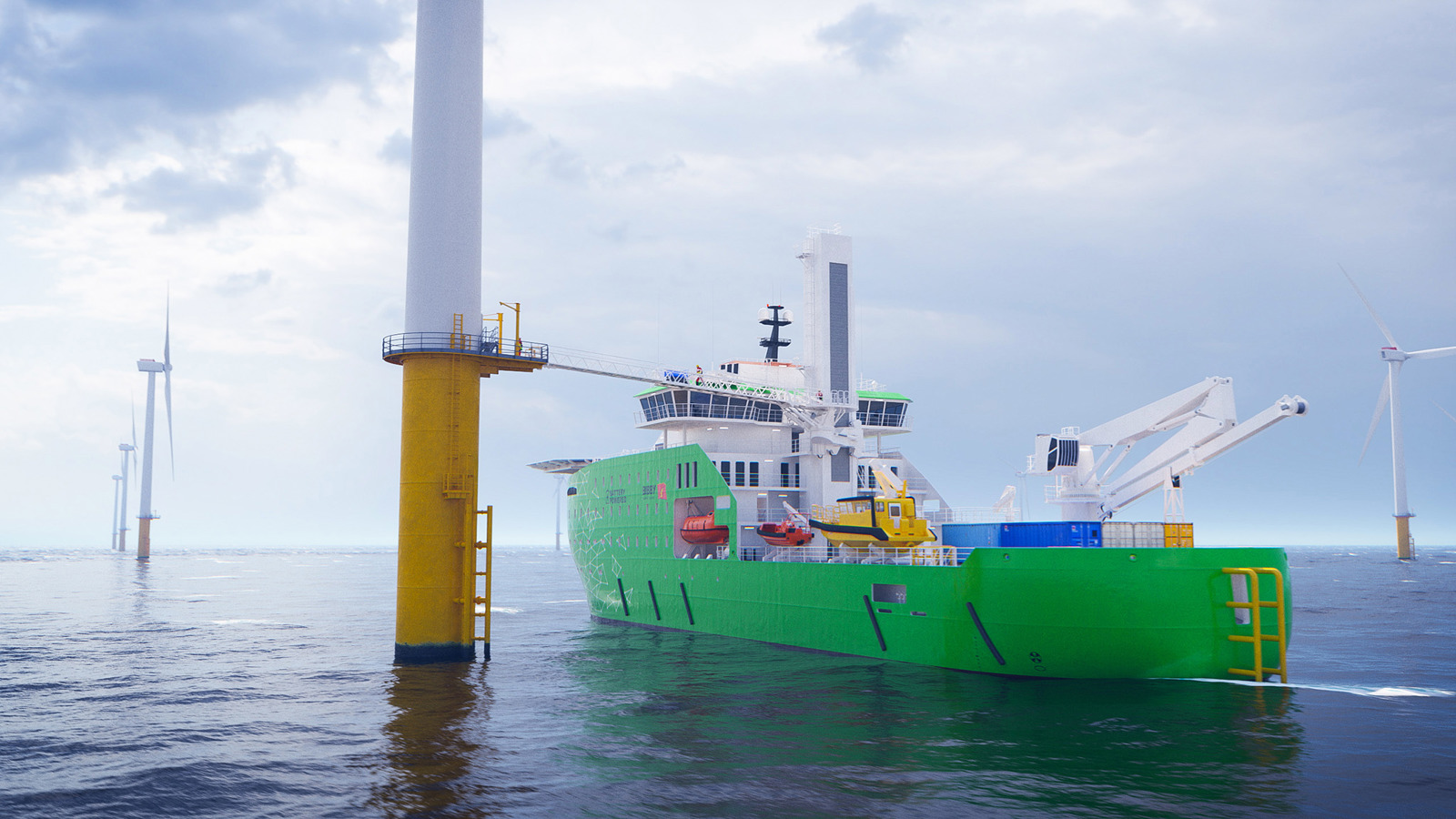
An eCSOC vessel by Bibby Marine connected to a wind turbine at sea.
Electrification

She’s electric: ship project hits new heights

Kongsberg Maritime’s skills and knowledge are at the heart of a vessel that will use green energy to take shipping to higher levels of excellence.

  • Craig Taylor
    Senior Manager PR & Communications

In a groundbreaking move for the offshore energy industry, UK company Bibby Marine is set to launch the world’s first full-electric commissioning service offshore vessel, or eCSOV.

This innovative new vessel will feature a range of technologies from Kongsberg Maritime, as well as the world’s largest installed battery capacity, enabling long periods of emission-free operation.

A vision for green maritime solutions

Bibby Marine’s journey towards green solutions began in 2019 with the WaveMaster Zero C project, exploring alternative fuels such as hydrogen, ammonia and methanol. Through a series of funded studies, including the Clean Maritime Demonstration Competition (CMDC) and the Zero Emission Vessel and Infrastructure (ZEVI) project, Bibby Marine was awarded nearly £20 million by the UK Government (from ZEVI) in 2023 to develop a zero-emission service operation vessel. 

Gavin Forward, the New Build Director of Bibby Marine.

We started our green journey by looking at alternative fuels and battery technology, and through various studies we realised that the best solution for an SOV was methanol as an alternative fuel.

Gavin Forward, New Build Director Bibby Marine

One of the key features of the eCSOV is its 25MWh Blue Whale Battery Energy Storage System, supplied by Corvus Energy. This lithium iron phosphate (LFP) system is the largest planned maritime battery installation to date on an offshore vessel, enabling the vessel to operate entirely on electricity for up to 24 hours. The decision to go with such a large battery capacity emerged from the need to optimise the operational profile, which includes sailing approximately 14 nautical miles infield a day and making up to 10 connections to turbines, and to ensure 15-year guaranteed operational life.

Kongsberg Maritime’s comprehensive equipment package is at the core of the vessel’s advanced systems. It includes full-electric rim-drive propulsion with azimuth, retractable and tunnel thrusters, an automation system, a full electrical control system, Dynamic Positioning (DP) and thruster control.

“The integration of Kongsberg Maritime’s equipment has been crucial,” Gavin adds. “Their package ensures that all systems work seamlessly together, optimising performance and reducing energy consumption.”

The rim-drive thruster system is a novel type of electric propulsion unit that mounts the propeller blades on an outer ring rather than a central hub, eliminating the need for a shaft and gearbox, reducing noise and increasing efficiency.

“The rim-drive thruster system offers significant benefits in terms of noise reduction and DP capability,” Gavin says. “We hope to exceed the V2C2 requirements from DNV when operating on battery, ensuring a quiet and smooth operation, which is crucial for our offshore wind market clients. This has the potential to be the quietest vessel in the market. Rim-drive also enhances manoeuvrability and efficiency, so it’s an ideal choice for this type of ship.”
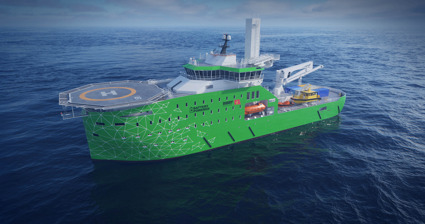
Unlike many new vessels that are methanol-ready, the eCSOV will be capable of full operation on methanol from the start. Methanol was chosen for its energy density, compatibility with diesel and the ability to achieve true zero emissions when using green methanol.

The vessel’s twin 3.5MW engines will run at constant load to charge the batteries, ensuring the most efficient operation and reduced emissions. Gavin is optimistic that offshore charging, taking power directly from the wind field, will be available by the time the vessel enters service in 2027.
“The vessel will be prepared for offshore charging. All the hardware will be installed for 11 kV AC charging up to 6MWh at 50Hz, and that means being fully charged in four to five hours.

“We will be fully tested and commissioned at sea trials, using methanol from the start of operations. If our end client wants to charter the vessel with green fuel, we can bunker with green methanol and leave the yard with zero emissions.”

An eCSOV by Bibby Marine at sea.

Digital technology is at the heart of this groundbreaking ship.

Unlocking the power of data

Digitalisation will also play a crucial role in optimising energy use. The integration of Kongsberg Maritime’s K-IMS system and third-party AI modelling software to collect and analyse data will enable route optimisation and manage efficient battery usage throughout the vessel’s life.

“We want to collect as much data as possible and use AI modelling to optimise our operations,” Gavin explains. “This will help us reduce the battery pack size for future vessels and improve overall efficiency.”

The eCSOV is designed to provide a high standard of living and working conditions for its crew and windfarm technicians. “We’ve focused on making the vessel as comfortable as possible,” Gavin says. “The accommodations are hotel-standard, with large open and bright spaces. We’ve also separated clean and dirty zones to keep noise and vibration down and optimise workflow onboard.”
The eCSOV is set to operate in UK and European waters, aligning with Bibby Marine’s commitment to green maritime solutions. Gavin is proud of the company’s innovative approach and its potential to lead the market in battery-electric vessels.

“We’re a UK-owned and operated family business with 200 years of history in the maritime sector. We aim to be the go-to supplier for battery-electric vessels in the SOV market, delivering high-end, bespoke assets.”

Bibby Marine’s new eCSOV stands as a testament to the possibilities of green technology and sustainable operations. With its groundbreaking design and advanced equipment package, the vessel is poised to set new standards for efficiency and environmental responsibility in offshore operations.