Modern drone threats are reshaping today’s operational landscape, demanding new capabilities and closer collaboration. 

As the pace of technological change accelerates, sharing operational experience and lessons learned has become increasingly important. 

For the 16th time, the annual PROTECTOR Users Working Group has brought the global PROTECTOR community together to do exactly that.
PROTECTOR Remote Weapon Systems

Evolving through experience

This year, a record 23 of PROTECTOR’s 31 user nations gathered in Switzerland for the 16th PROTECTOR Users Working Group (PUWG). Across three days of presentations, discussions and live demonstrations, participants explored operational experience, emerging requirements and developments across the PROTECTOR portfolio. 
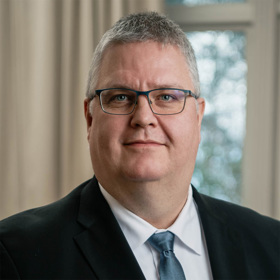
The most valuable insights come from the people using the systems. Bringing the global user community together allows us to learn from their experience and turn that knowledge into future capabilities.

Kjetil Reiten Myhra, EVP Defence Systems at KONGSBERG. 

Demonstrating capability

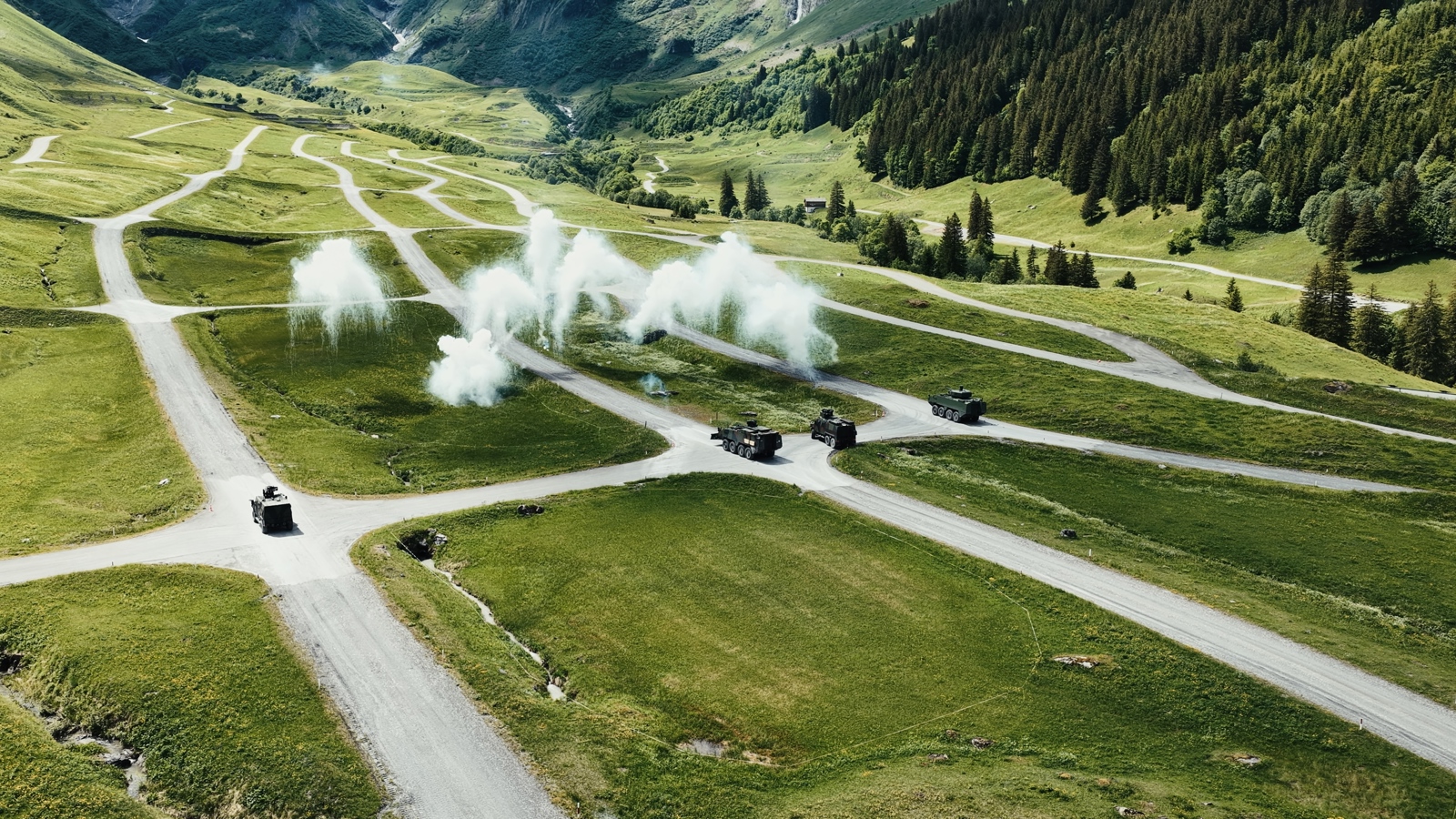
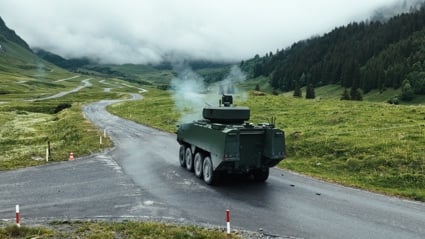
Surrounded by steep mountain terrain at the Wichlen shooting range, more than 300 users, partners and KONGSBERG representatives gathered to observe PROTECTOR capabilities in action.

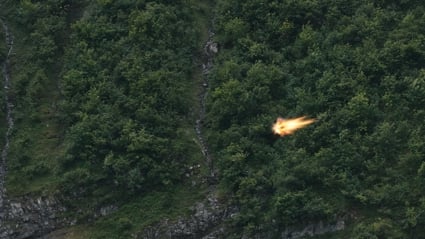
Following a range briefing, participants observed a series of live scenarios involving engagements against both ground and aerial targets. Several of the demonstrated platforms were equipped with Integrated Combat Solution (ICS) and PROTECTOR CUAS capabilities, providing insight into how information can be shared across networked systems and how different capabilities can contribute throughout the engagement chain.

Attendees were able to follow events as they unfolded on the range through a shared operational display and live commentary, illustrating the full engagement chain from target detection and tracking through to engagement.

“The demonstration brings together almost the entire portfolio, from our smallest weapon stations to the MCT-30 turret,” says Scott Hall, BD Team Manager, Land Systems at KONGSBERG. 

“And our Integrated Combat Solution is the brain behind it all. It networks the systems together, allowing vehicles to share information, share targeting data and collaborate in ways that weren't possible before.” 

“We're grateful to armasuisse for co-hosting us once again,” says Hall. “It gives us an opportunity to engage directly with our users and discuss everything from production and logistics to interoperability across nations.” 

The demonstrations featured:

  • The Hybrid Eagle 4x4 with CROWS
  • The Autonomous Eagle 4x4 with PROTECTOR RS4
  • A Swiss Armed Forces Pionier Panzer equipped with PROTECTOR RS4
  • The Eagle 6x6 with PROTECTOR RS6
  • The Piranha IV fitted with the PROTECTOR MCT-30 turret.

All demonstrated configurations were integrated on GDELS-Mowag platforms. 
Operational insights and future developments

While the demonstrations showcased capabilities in action, the conference day focused on the experiences, requirements and technologies shaping the future of the PROTECTOR portfolio.

Among the contributors to the conference programme were representatives from armasuisse, who shared operational experience with PROTECTOR Remote Weapon Systems, drawing on more than 15 years of service and a fleet of more than 750 systems delivered to the Swiss Armed Forces.

“Our cooperation with KONGSBERG is long-standing and built on a strong partnership. We have been using these systems for more than two decades, particularly on armoured wheeled vehicles. This continuity builds trust and provides a solid foundation for further developing existing capabilities,” said Lieutenant General Benedikt Roos, Chief of the Swiss Armed Forces.

“Counter-drone defence and interoperability are key priorities for us. Modern conflicts require networked solutions and close cooperation across systems and national borders. The exchanges arising from this PUWG make an important contribution to that.”

Drawing on operational experience from Ukraine, the sessions also highlighted the importance of reliability and consistent performance under demanding conditions, reinforcing the value of proven systems in an increasingly complex threat environment. At the same time, discussions on emerging technologies and Counter Unmanned Aerial Systems reflected the need to continuously adapt to new challenges as the character of conflict continues to evolve.

“The primary purpose of PROTECTOR has always been to protect the soldier,” says Jørgen Bull, Senior Vice President, Land Systems at KONGSBERG. “Fifteen years ago, much of the focus was on threats such as improvised explosive devices (IEDs). Today, drone threats are evolving at an extraordinary pace, and we have to evolve with them. This is not about developing a single solution. It's a continuous development cycle driven by changing threats and operational needs.”

The 2026 event concluded with the announcement that next year’s PUWG will be held in Norway.

Realistic training for modern operations

On stage, PROTECTOR CORE™ Training System was discussed as part of the wider need to prepare operators for more complex operational environments. In parallel, participants could visit a dedicated demonstration room throughout the day to test the system firsthand. Built around a digital recreation of the Wichlen training area, the setup allowed users to engage with realistic scenarios, take on different roles and review performance through automated feedback.

Modern weapon systems are becoming increasingly connected, placing new demands not only on technology, but also on the people operating it. Realistic and accessible training therefore plays a critical role in maintaining readiness. With PROTECTOR CORE™, operators can train using real controls and realistic virtual environments, allowing procedures, coordination and decision-making to be practised long before entering a live training area

More than two decades of development

The origins of PROTECTOR date back to the late 1990s, when KONGSBERG and the Norwegian Armed Forces set out to address a simple challenge: how to improve crew protection without compromising operational effectiveness.

Since entering service in 1999, PROTECTOR has grown from a single remote weapon station into a broad portfolio of systems and capabilities.

Today, the family supports weapon calibres from 5.56 mm to 30 mm, with integration options ranging from advanced sensors and missiles to software-driven capabilities such as Integrated Combat Solution and Counter Unmanned Aerial Systems.
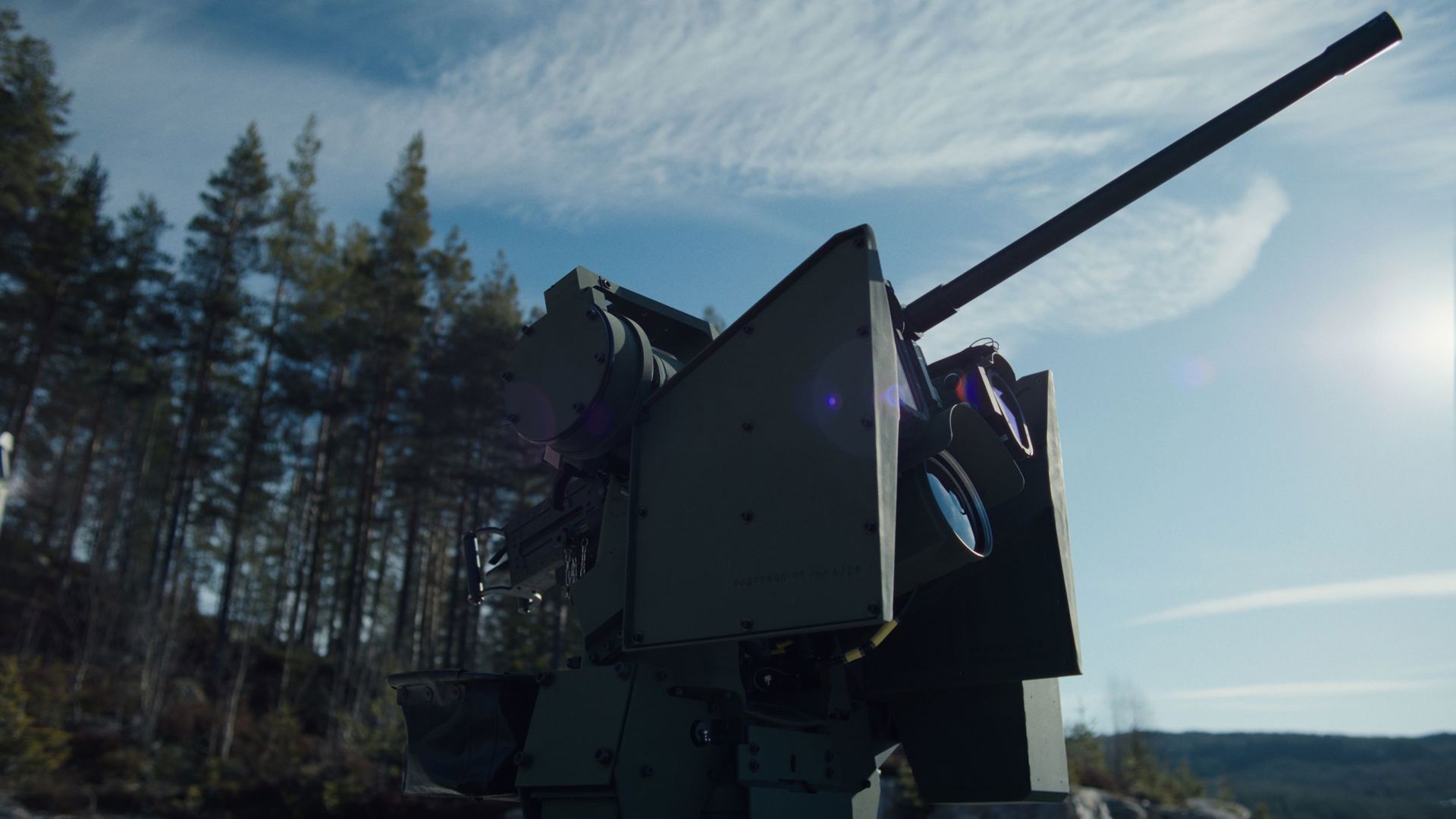
31 nations now operate PROTECTOR systems across wheeled, tracked and naval platforms. While the technology has evolved significantly over the past two decades, the original objective remains unchanged: delivering reliable, effective and adaptable capabilities for those who depend on them.