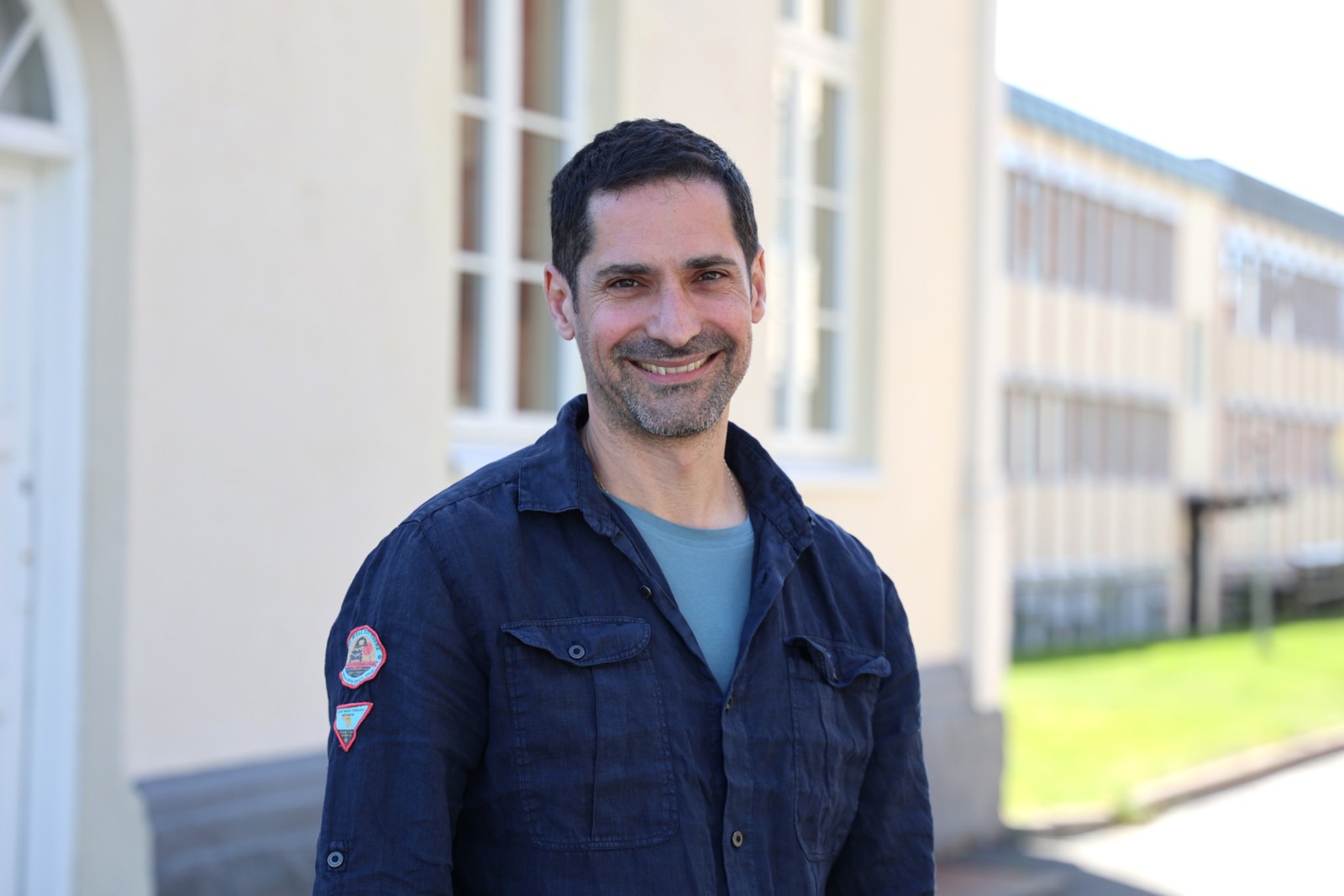
Understanding the Bigger Picture in Kongsberg
How do you develop systems that actually work when it matters most? For Thomas, the answer is about understanding the bigger picture, not just the components. As a system architect at KONGSBERG, he works with complex missile systems where precision and real-world understanding must go hand in hand.
-
Text:Helene Bergset
Photo:Helene Bergset, Magnus Bjørnnes
“The role of a system architect is about understanding the need for the product, breaking it down into functions, and ensuring that all parts of the system work together,” he explains.
For Thomas, the path there didn’t start with systems, but with details.
Curiosity as a Driving Force
Thomas grew up near Marseille in the south of France. From an early age, he was fascinated by how things worked and how they were put together.
“I used to take apart everything I could get my hands on to understand it. Putting it back together again was a bit more difficult,” he says with a smile.
This curiosity became the foundation for an engineering career—and later, the ability to lift his perspective from individual parts to complex, integrated systems.

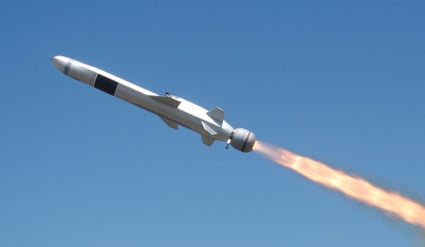
Thomas is a systems architect in the missile division. The image shows the NSM (Naval Strike Missile).
From Mechanics to System Architecture
He started at KONGSBERG in the Space division, specializing in mechanics. As his responsibilities grew, so did his perspective.
“When you take on more responsibility for entire products, you have to understand more than just one discipline. You need to see how everything fits together,” he says.
The transition to system-level work happened gradually but naturally. Today, he is part of the missile division, where he works closely with different disciplines to develop advanced and critical solutions.
The role requires both technical expertise and the ability to coordinate.
“You have to see the big picture while also bringing everyone together,” he says.
When Reality Challenges the Design
An early field experience became defining for how Thomas thinks about systems today.
During a military exercise in France, he observed how a weapon station was actually used in practice—and how reality differed from the assumptions made during design. The weapon station had been equipped with a rubber cover at the end of the barrel to prevent dust and dirt from entering.
“During the exercise, I asked the soldiers when they usually removed the rubber cover. The vehicle is large, so they would have had to climb up to take it off,” he explains.
The solution turned out to be very different from what had been assumed.
“The soldier told me that if they didn’t have time to remove the cover, they would just shoot through it. That was a situation we hadn’t accounted for during development. I immediately saw many risks of what could go wrong,” he says.
The experience caused a lasting shift in perspective.
“It shows how important it is to understand how products are actually used—not just how they are designed to be used,” he says.
Today, this is a central part of how he approaches system design.
“We need to design for both normal and degraded situations. Under normal conditions, the product should deliver full performance, while in degraded situations some reduction in performance can be accepted — as long as the most critical functions remain available. A systems perspective would have captured such scenarios and assessed safety and consequences more effectively,” he explains.
Cross-Disciplinary Collaboration as a Competitive Advantage
As a system architect, daily work is characterized by collaboration across disciplines.
“We work with everything from analyzing customer needs and concept development to identifying functions, choosing architecture, and developing requirements—and we follow up on both implementation and verification. Many disciplines are involved, and you have to work closely with subject-matter experts,” he says.
It is in the intersection of disciplines that the best solutions emerge.
“I get energy from solving problems together with others. When we find solutions that none of us could have come up with alone, that’s when you know you’re working in a great place,” he says with a smile.
At the same time, the role requires the ability to prioritize and make decisions.

Engineers tend to want to perfect everything, but we have to balance quality, time, and budget. As I often say: ‘Good enough is the new best’.
From Toulouse to Kongsberg
After completing his education at INSA (National Institute of Applied Sciences) in Toulouse, Thomas began his career in the French defence industry. After several years of experience, he and his partner wanted new challenges.
“We were looking for a bigger change. I was familiar with KONGSBERG through the company I had previously worked for, and I had a very good impression,” he says.
Thomas had never been to Norway before but knew of the country through a collaboration between France and Norway called NORGINSA, where Norwegian students study in Toulouse.
Chance also played a role. In 2014, he visited the KONGSBERG website to look for job openings. There, he found a position in the Space division—but discovered that the application deadline was the same day.
“I submitted my application immediately. Two days later, I was contacted, and a few weeks later I was on the train from Oslo Airport to Kongsberg for a job interview— and my first visit to Norway,” he recalls.
What started as curiosity quickly became a life choice.
“I thought it was very calm and beautiful. I liked the town, the forest, and the mountains surrounding it,” he says.
More Than Technology
Today, he and his partner are still living in Kongsberg with their two children. For Thomas, the job is not just about technology, it’s also about the framework around it.
“The work-life balance here in Norway suits us perfectly. It means a lot to me to be present for my family,” he says.
That presence has also led to new roles outside of work, including serving as a ski coach—even though he had never skied before moving to Norway.
“My kids love it, so I had to learn. Now I coach cross-country skiing. I would never have imagined that,” Thomas laughs.