The courage to say yes
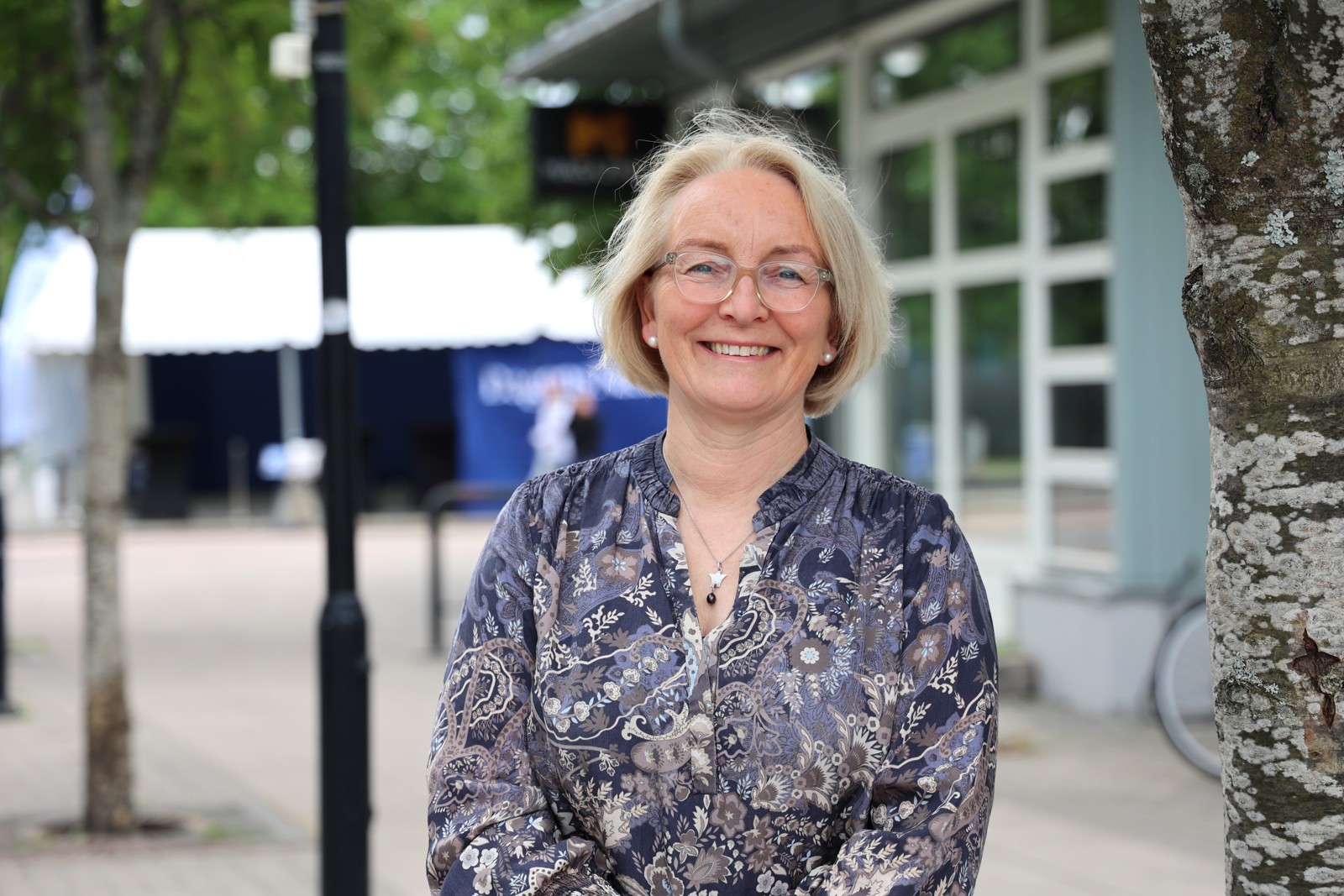
The path to some of KONGSBERG’s most advanced research collaborations was never carefully planned. For Berit, it has been shaped by chance, curiosity and an ability to seize opportunities when they arise. What many of her choices have had in common is the courage to say yes before knowing where they might lead.
-
Text:Helene Bergset / KONGSBERG
Photo:Helene Bergset / KONGSBERG
From deep expertise to strategic choices
After 25 years at SINTEF, where she worked as both a senior researcher and a manager, Berit brought her wealth of expertise to KONGSBERG. Twelve years later, she draws on that experience to ensure that research delivers real value.
“My job is to ask the right questions: Why are we doing this? What do we want to get out of it? And how do we make sure we actually achieve that?” she says.
She is clear that, for an industrial company, external research collaboration needs to be strategic and focused.
Chance encounters and a strong sense of commitment
Berit describes the path to her current role as a combination of experience, initiative and a few coincidences along the way.
“At KONGSBERG’s Technology Conference, I heard one of our leaders say that we needed to get better at developing technology with others and at securing EU funding. At the time, I was still working as an evaluator for the European Commission, assessing research proposals. I thought, “This is expertise I can contribute,”” she says.
Rather than waiting to be asked, she got in touch.
“They were just about to start work on a major application involving autonomous ships, and I was welcomed into the team straight away,” she says.
The challenge of different timescales
One of the biggest challenges in her role is the difference in pace between the worlds of research and industry.
“It can take a year and a half from submitting an application to the project actually starting. In that time, a great deal can change in an industrial company,” she says.
“Sometimes we take part in projects because we need strong research communities in Norway that we can collaborate with and recruit from. In that way, we are helping to build knowledge beyond our own organisation as well,” she says.
“We cannot be self-sufficient. We are part of an ecosystem and depend on strong partners around us,” she says.
Collaboration with research communities does not necessarily deliver results in the short term, but it is important for securing the knowledge, expertise and new technological opportunities we will need in the years ahead.
You need to know the opportunity exists
Berit holds a PhD in engineering cybernetics from NTNU, the Norwegian University of Science and Technology. Cybernetics may sound a little mysterious, but at its core it is about how systems are controlled and regulated. Whether it is the human body keeping blood sugar levels stable, a ship maintaining its course through currents and waves, or a missile adjusting its trajectory based on what it measures along the way, the principles are the same. The technology is central to many of KONGSBERG’s products.
For Berit, it was precisely this link between theory and practice that made the subject so fascinating.

I liked mathematics, but I needed to see it do something. I needed to see that it actually worked in practice.
Her path into the field was opened up through both family and working life. One of her cousins had chosen the same path, and a summer job gave her an insight into how the technology is used in practice.
“I got a summer job at a paper mill after my first year of university in Trondheim. My boss was a cyberneticist and took me around the mill to show me how the control systems worked in practice,” she says.
The experience brought the theory to life and gave her an insight into a field she might otherwise never have discovered. That is why Berit believes role models and visible examples are crucial in shaping the choices young people see as possible.
For many young people, and perhaps girls in particular, technology subjects are not necessarily an obvious choice.
“If you don’t know about it, you won’t choose it either,” she says.
No plan, just the courage to say yes
Although her career may look carefully planned in hindsight, Berit emphasises that she has never had a detailed plan.
“It’s probably more that things have just happened. I’ve taken the opportunities that have come my way,” she says.
One phrase, however, has stayed with her through many of those choices. It was printed on a fridge magnet she bought as a 16-year-old exchange student in California.
“Feel the fear and do it anyway. That mindset has become important to me,” she says.
For Berit, it is not about being fearless, but about accepting that uncertainty is a natural part of trying something new.
“I like being thrown into things I don’t quite know how to do. I enjoy the steep part of the learning curve. When I start getting really good at something, I often feel it’s time to look for new challenges,” she says.
When uncertainty sets in
Berit knows that trusting your own choices is easier said than done, particularly when you are young and in the middle of a demanding degree.
“The first few years of a technology degree are tough. You’re used to doing well, and then you start a course where everyone around you did well at school too. Suddenly, you feel as though you’re falling a little behind,” she says.
In that situation, it is easy to think that everyone else understands more than you do, or that feeling uncertain means you have made the wrong choice. For Berit, having a community around her made all the difference.
“The most important thing for me was working with other people. Not sitting on my own thinking I was the only one who didn’t understand,” she says.
“Often, it simply means you’re facing something you haven’t learnt yet. That’s an important distinction,” she says.
Her advice to young people considering a career in engineering is therefore as simple as it is demanding.
“Be a little brave. A little persistent. And a little hard of hearing sometimes,” she says with a smile. “There are so many interesting jobs out there for engineers,” she adds.

“You can spend your entire career at KONGSBERG and still find new challenges. There are so many opportunities to learn, develop and do something new,” she says.
More than technology
That curiosity does not stop when the working day ends. In her spare time, Berit can often be found playing trumpet in SINTEF’s big band.
“Both music and technology require you to be willing to practise, work systematically and put in the time to achieve a result. There’s a similarity there,” she says.
At the same time, music gives her something different from technology.
“Music is important to me because it gives me a different kind of community and different goals from those I have at work. It’s healthy to be part of different environments,” she says.
A sense of community has been an important part of her life, throughout her studies, working life and spare time. It has given her support when challenges have been difficult and new perspectives when she has needed them.
She has one piece of advice for those now facing choices of their own:
“You don’t need to have the whole plan figured out. Sometimes it’s enough to be curious, say yes to the opportunities that come your way and take the first step,” she concludes.