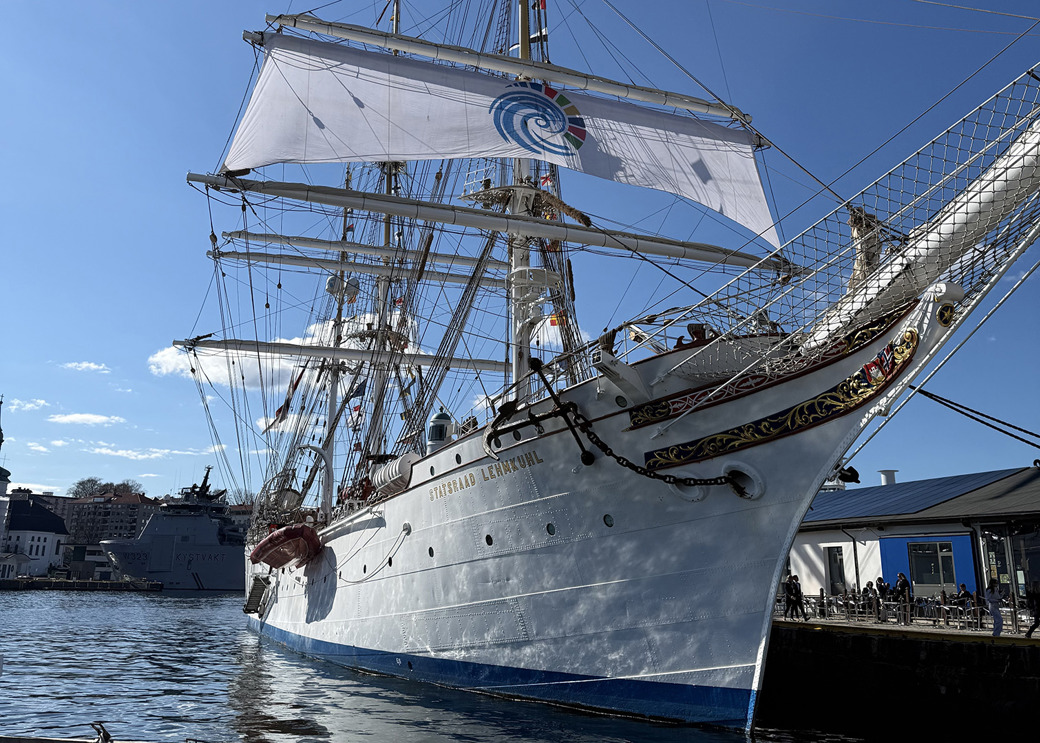
KONGSBERG hosted an official reception in partnership with the Municipality of Bergen, Nansen Environmental and Remote Centre, the Norwegian Institute of Marine Research, and the University of Bergen.
High Arctic has become an international hot spot
Governing Mayor Christine Meyer opened the event at the tall-ship Statsraaad Lehmkuhl, followed by two panel discussions.
Firstly, “EU and Norway shared interests in the Arctic and Northern Sea,” featuring State Secretary Astrid Bergmål from the Ministry of Foreign Affairs and Dr. Craig Donlon, Head Earth Observation System Architect at ESTEC/European Space Agency.
And then, “One Ocean City – research, technology and industry in collaboration,” with panelists Director Tore Furevik, Nansen Environmental and Remote Sensing Center, rector Margareth Hagen, University of Bergen, Director Nils Gunnar Kvamstø, Institute of Marine Research) and Senior Vice President Arne Hestnes, KONGSBERG.
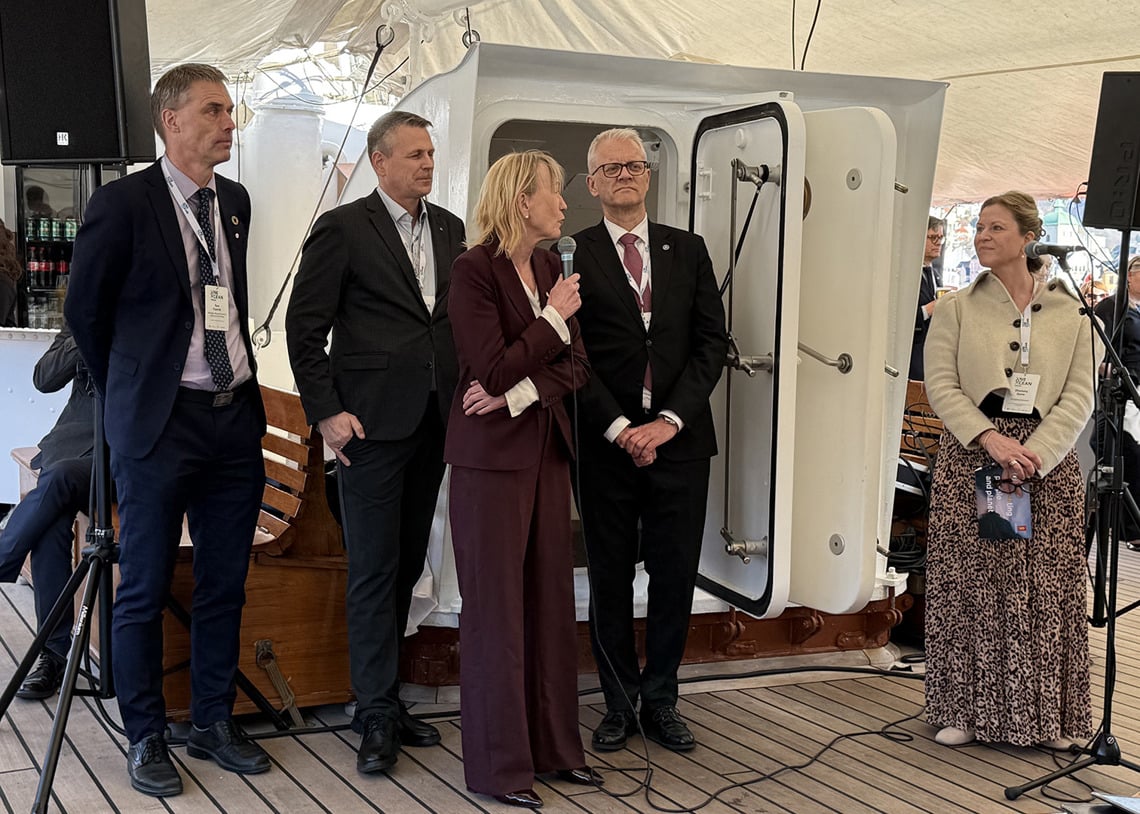
From left: Tore Furevik, Director, Nansensenteret, Arne Johan Hestnes, Director Digital Technology, KONGSBERG, Margaret Hagen, University of Bergen, Nils Gunnar Kvamstrø, Director, Institute of Marine Research, Charlotte Gjone, Vice President Communication, KONGSBERG. Photo: Nansensenteret.
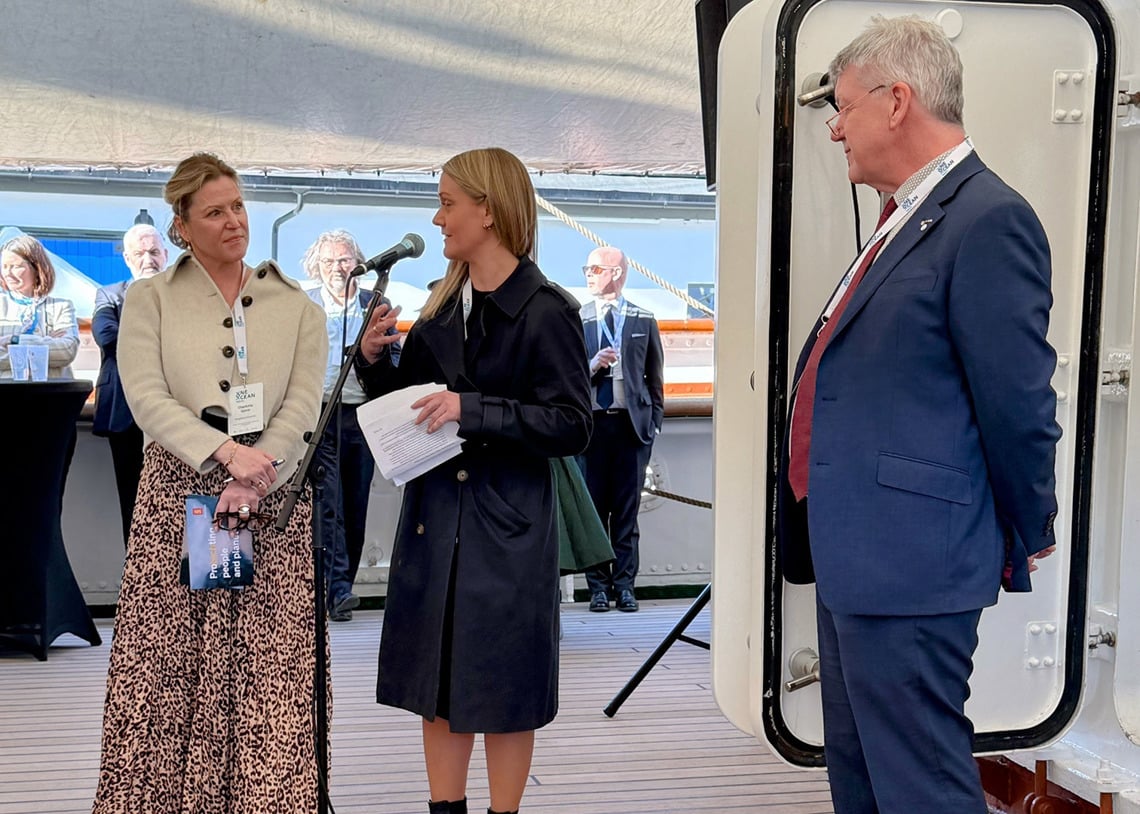
From left: Charlotte Gjone, Vice President Communication, KONGSBERG, Astrid Bergmål, State Secretary, Norwegian Foreign Affairs, Dr. Craig Donlon, European Space Agency. Photo: Nansensenteret.
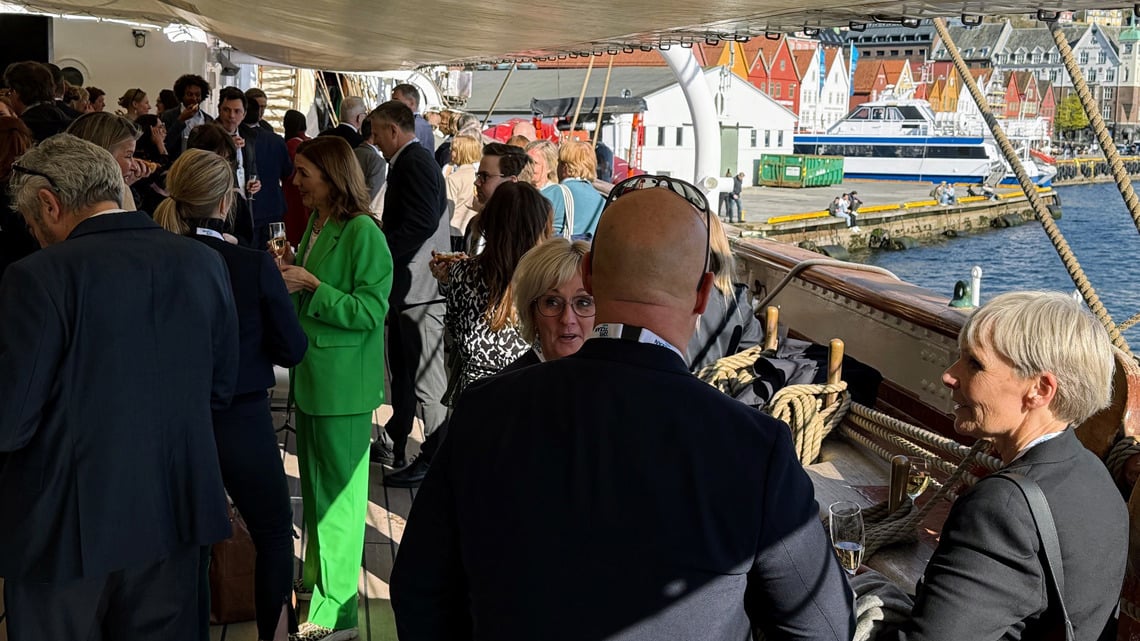
Photo: Nansensenteret
Collaborate during times of change and uncertainty
At the One Ocean Summit, the official opening session of One Ocean Week in Bergen frequently highlighted collaboration as a central theme. This emphasis on partnership was reiterated during panel discussions held aboard the tall ship.
Some key take ways form the panel talks:
- The Arctic holds strategic significance due to its geopolitical, economic, and environmental importance. Rapid changes in the region emphasize the need for increased collaboration and ongoing dialogue between politicians, scientists, academics, and industry leaders.
- Comprehensive information about the ocean—from space, the surface, water columns, to the seabed—is still needed. Climate change poses dramatic impacts on ocean life, with Arctic warming three times faster than the global average. Improved knowledge is essential for informed decision-making about the future.
- Strong collaboration is crucial for the future. Such partnerships bridge generational gaps, accelerate innovation, and foster sustainable, resilient solutions to complex global challenges. In Norway, a robust and committed partnership already exists between scientific institutions, academic organizations, and industry, but strengthening these collaborations remains more important than ever.
During the DNB One Ocean Conference, the Senior Vice President of Technology at KONGSBERG delivered a keynote address highlighting recent technological developments, innovative solutions, and advanced capabilities across the maritime sector—from seabed exploration to applications in space. The presentation also underscored ongoing advancements in unmanned vehicles and robotics. This year's conference placed particular emphasis on innovation, capital investment, and Norwegian competitiveness within Western Norway's ocean industries, attracting approximately 300 participants from business, investment, entrepreneurial, and academic communities.
About One Ocean Week
One Ocean Week is an annual event dedicated to debate, sharing experiences, and activities focused on the sustainable use of the ocean. This event is part of the UN Decade of Ocean Science for Sustainable Development. A similar event was hosted in Seattle, Washington in October last year.
On April 18, the tall ship Statsraad Lehmkuhl returned to Bergen after completing the One Ocean Expedition. The vessel was upgraded into a modern research ship, allowing it to gather data on temperature, oxygen levels, ocean acidity, microplastic concentrations, and the presence of fish, marine mammals, and other organisms. KONGSBERG participated as a partner in the expedition and supplied much of the onboard equipment.