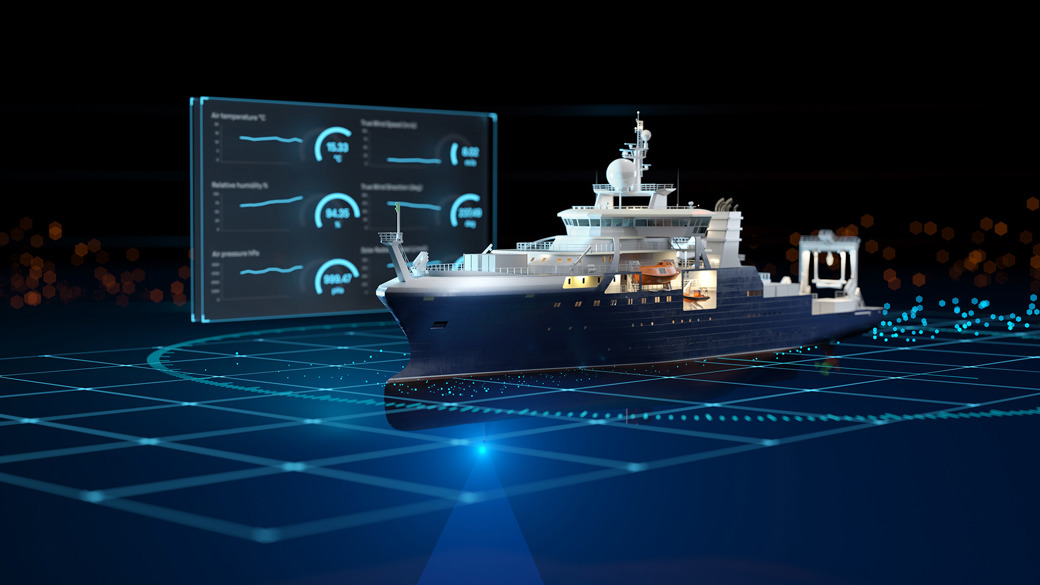
Climate change and environmental damage are major global issues, with many nations already affected. The Arctic's shifting conditions are concerning, but significant research into ocean life was funded in 2025.
Cutting-edge technology for enhanced data performance
Camilla Kiss, President of Discovery, highlights the delivery of advanced scientific equipment crucial to the successful execution of research vessels’ mission. The systems will support innovative research and efficient operations, with contracts valued at about 1.3 BNOK during 2025.
"Research vessels act as mobile labs, letting scientists gather data on marine ecosystems, climate change, fish stocks, and deep-sea habitats. Our technology helps manage resources, advance global understanding, and develop new marine tools. These ships support equipment deployment, sample collection, and direct observation in tough environments. In 2025, research vessel orders and ocean science grew solidly, which bodes well for our company and the oceans," she says.

Camilla Kiss, President DiscoveryOur technology helps scientists and their partners gain critical insight into marine ecosystems
Takes part in the global ocean initiative
Throughout 2025, Discovery supplied state-of-the-art instruments such as multibeam and single beam echo sounders, both for shallow water and deep-water use, various transducers, environmental monitoring sensors and a range of sonars to equip modern research vessels. While satellite data offers valuable insights, top-tier observations from large research ships often form the foundation of ocean science.
“Our technology helps scientists and their partners gain critical insight into marine ecosystems and fosters sustainable management based on multidisciplinary observations collected over many years. Long-term ecosystem studies rely heavily on the sophisticated capabilities of large research vessels, which are crucial for collecting global ocean data. We take pride in our role in international ocean research,” says Kiss.