A position of power
Kongsberg Maritime’s Dynamic Positioning system makes anchor handling easier and more efficient for both crew and vessels.
-
Craig TaylorSenior Manager PR & Communications
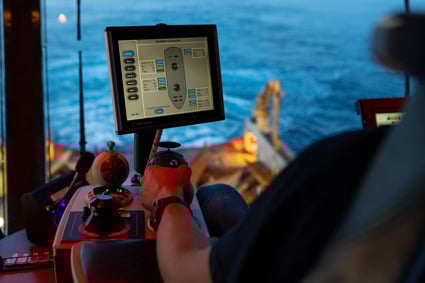
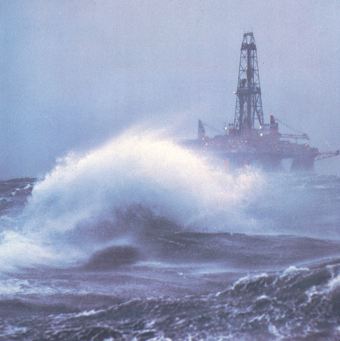
The ship is kept stable, even in adverse weather.
A robust and safe system
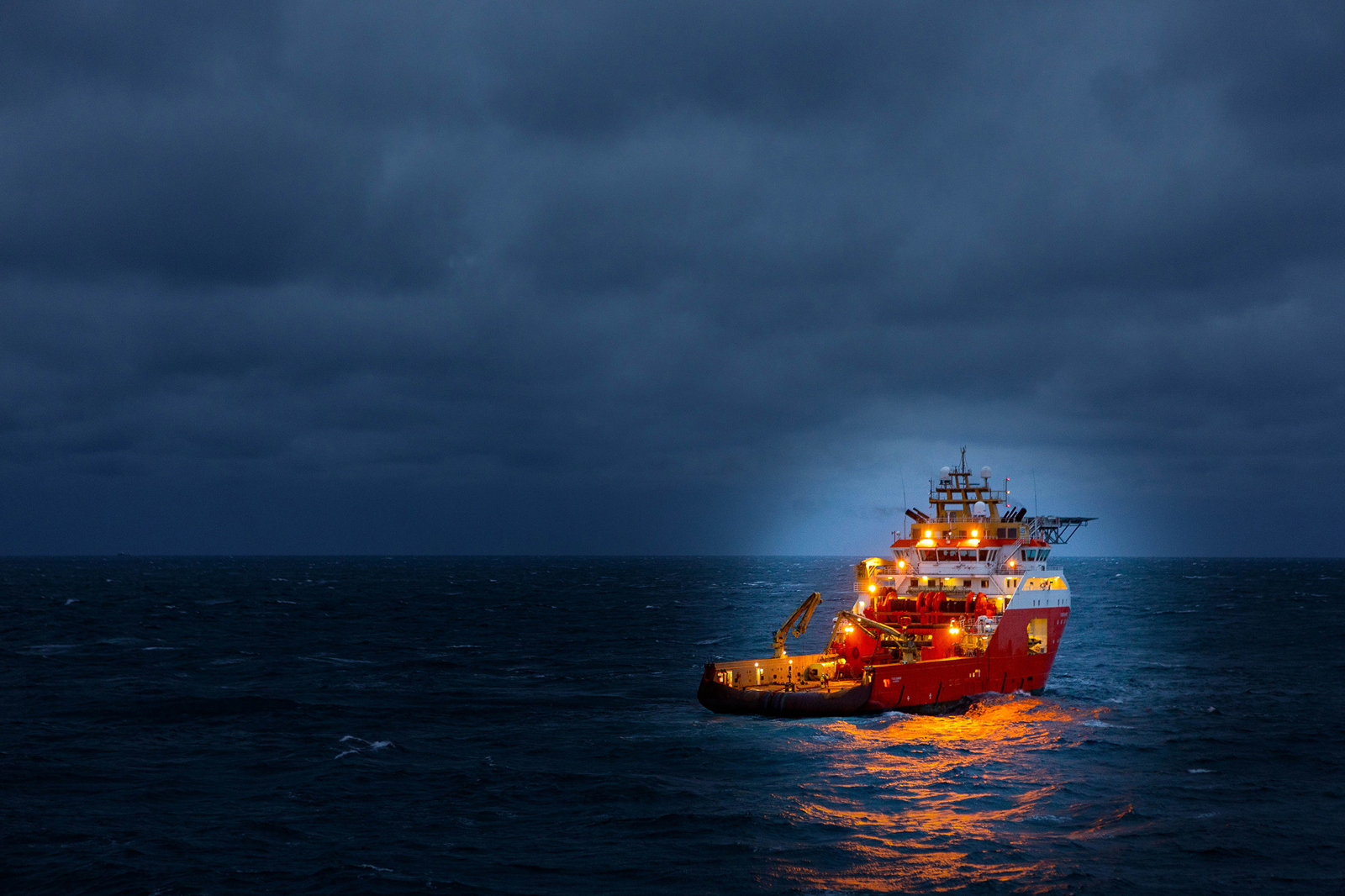
Captain Jens says that the DP system on Normand Drott keeps the vessel very stable during sensitive work such as cable and hose handling or ROV launch and recovery, even in tough seas. He says weather limits on his vessel’s DP system are usually higher than for the operations they conduct. “In many cases, the operation stops before the DP stops,” he says.
The K-Pos DP is also easy to operate, a big plus for the crew. “It is among the easiest systems to use,” says Jens. “It’s easy to understand the different functions, the modes and how to operate it. It is also robust and it doesn’t change too much. We don’t need new things all the time.”
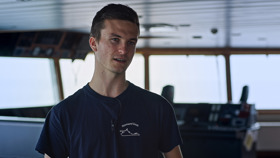
Bjørnar Solås, Normand Drott’s second officerA DP system gives a stable platform to work from. We will have full control of the vessel and its movements, and we’ll be able to keep the vessel in position, which usually can be quite critical.
The DP system has so many redundancies that I feel safe when I’m using it… I don’t feel I [will] lose control of the vessel. When I tell the DP what to do, I know it will do it.
Cutting fuel, saving the sea
One of Solstad Offshore’s long-term goals is cutting emissions. In 2009, the company began a campaign to find ways to cut fuel use and emissions. Kongsberg Maritime became a partner in this plan when it signeda decarbonisation agreement with the company in 2023.
Kongsberg Maritime’s DP system features a special mode, allowing Normand Drott to stay on station in DP while reducing fuel consumption by up to 20 per cent.
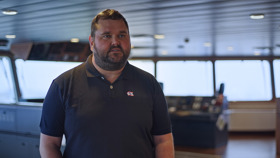
Captain of Normand Drott, Jens Goderstad.The DP helps us to reduce the loads on the engines and then the amount of fuel we are using, we can see that we save some fuel every time. So, we save the environment and save running hours on the equipment on board.
Challenges and changes are inevitable, and Kongsberg Maritime helps customers address issues as they arise, according to Captain Jens. That help is vital to Solstad Offshore, as all its vessels have Kongsberg Maritime equipment onboard. Normand Drott has Kongsberg Maritime winch systems, cranes, steering systems and thrusters, all working together to achieve maximum efficiency.
This integration ensures compatibility and efficiency across various systems. The TowCon operating system, for instance, manages all the winches. Bjørnar describes it as “the brain of the whole winch package”.