Advancing autonomous ocean observations with EK80 and Boaty McBoatface
A recent marine autonomy trial off the coast of Plymouth brought together new observing capabilities, including KONGSBERG scientific echosounder technology and a miniaturized holographic plankton imaging sensor from the University of Plymouth aboard the National Oceanography Centre’s Autosub Long Range AUV Boaty McBoatface to study marine ecosystems at oceanographic fronts - dynamic boundaries between different water masses important for marine life.
-
Text:KONGSBERG
Photo:Peter Miller
Taking scientific echosounders to autonomous platforms
As ocean research moves towards increasingly autonomous operations, integrating proven scientific instruments onto new platforms opens up new possibilities for sustained and efficient ecosystem monitoring.
During a two-week trial in Plymouth, KONGSBERG supported the integration of an EK80 scientific echosounder with two transducers into the National Oceanography Centre’s Autosub Long Range autonomous underwater vehicle, ALR1500, better known as Boaty McBoatface.

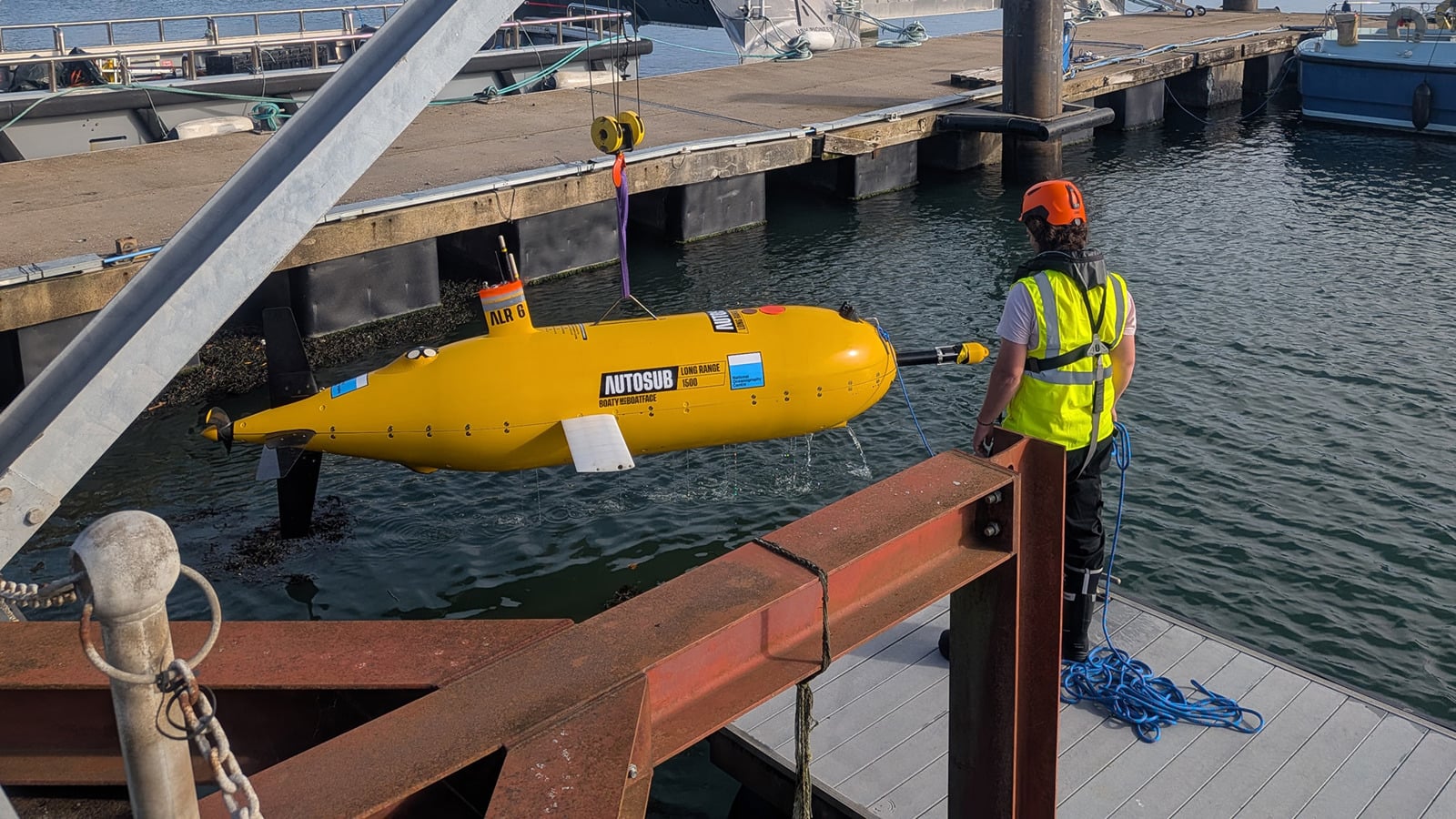
The National Oceanography Centre's ALR1500 vessel, aka "Boaty MycBoatface", being lowered into the water. (Photo: Lillian Lieber)
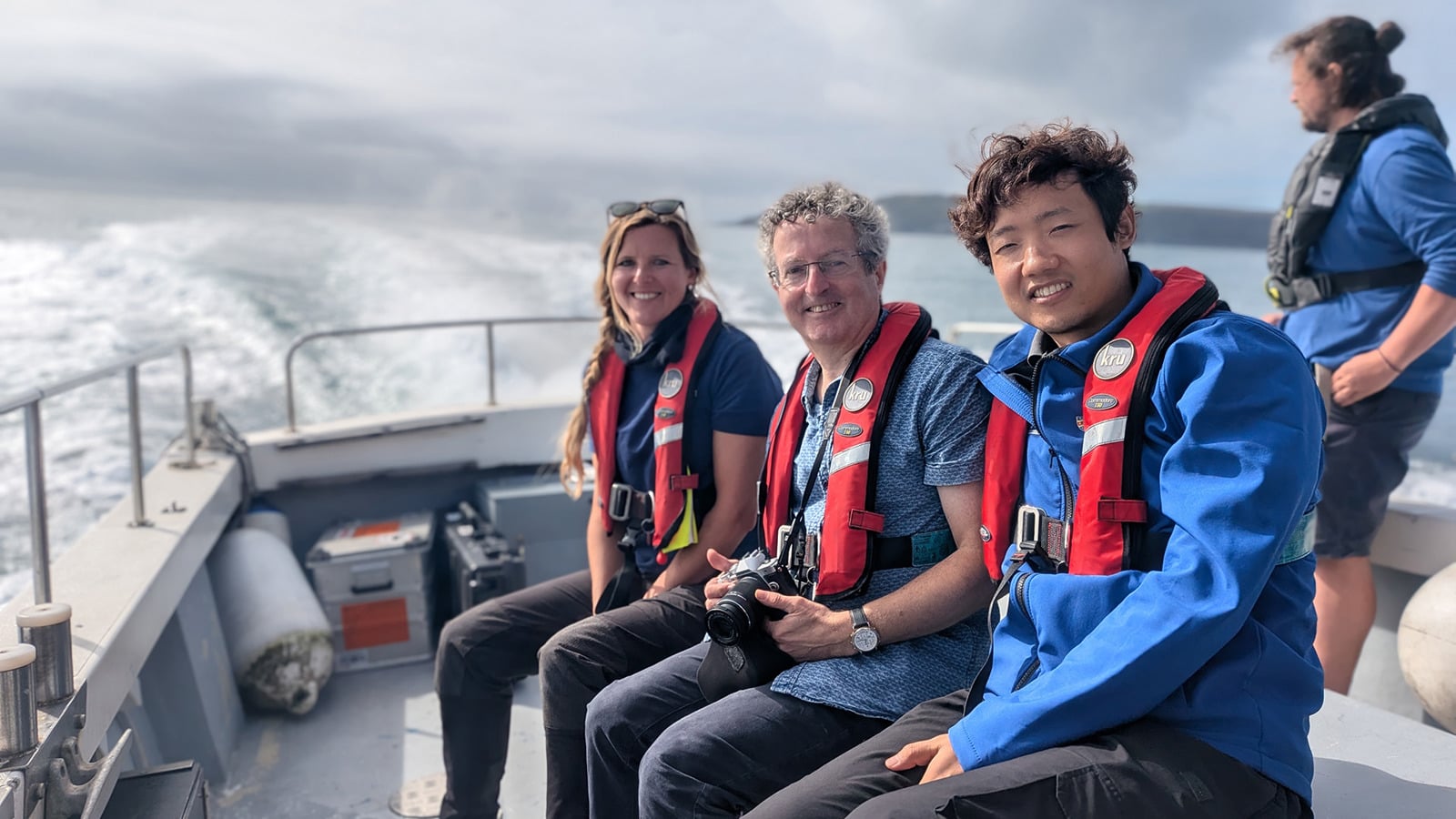
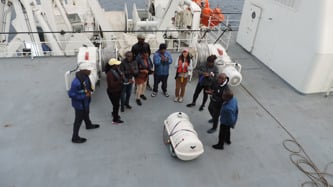
From left - Dr Lilian Lieber, Dr Peter Miller and Dr Yang Yang heading out to see during the two-week trial (Photo: Lillian Lieber)
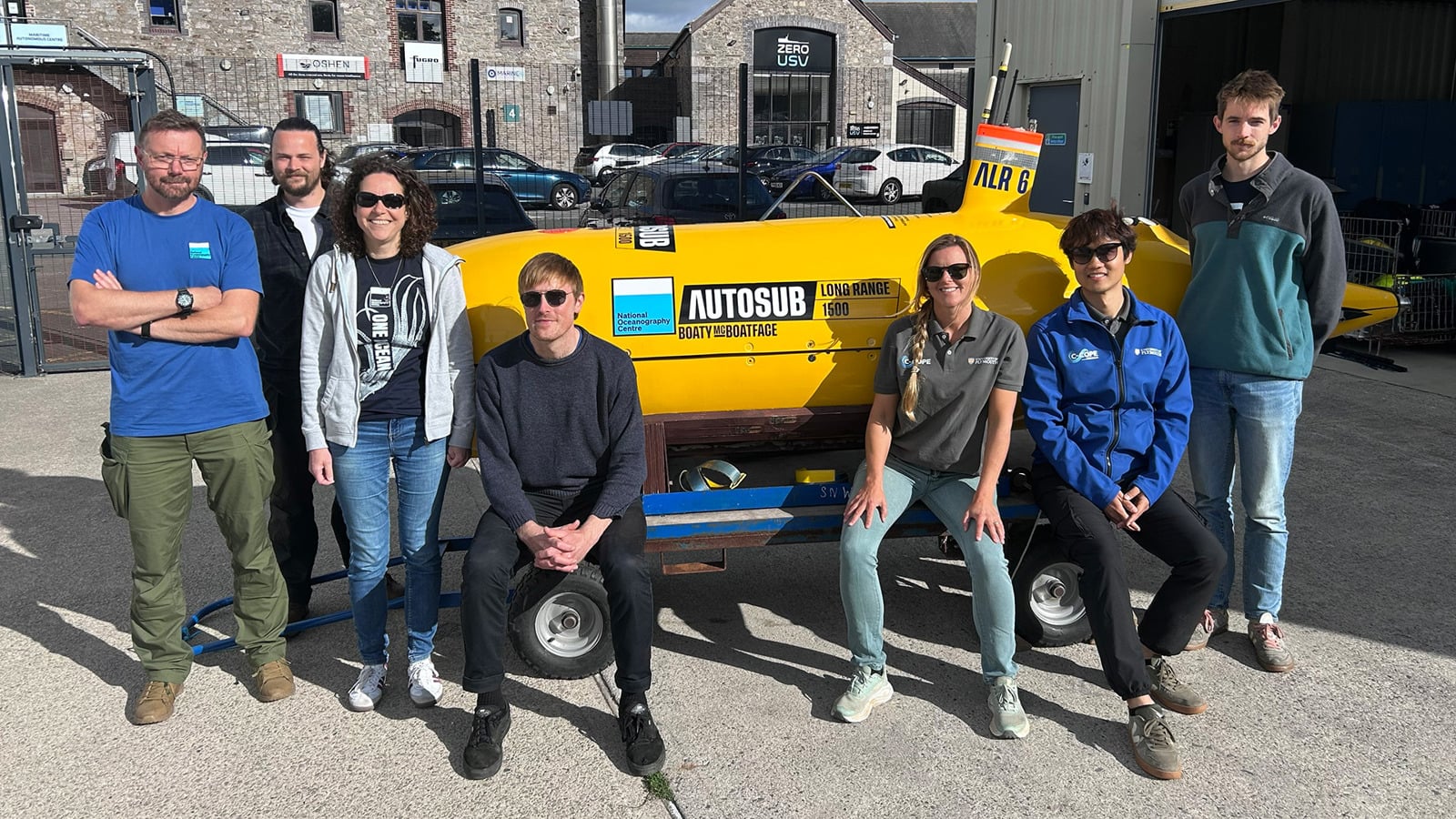
Members of the trial team at Turnchapel Wharf, which played an instrumental role in making the trial deployments possible (Photo: Dr Yang Yang)
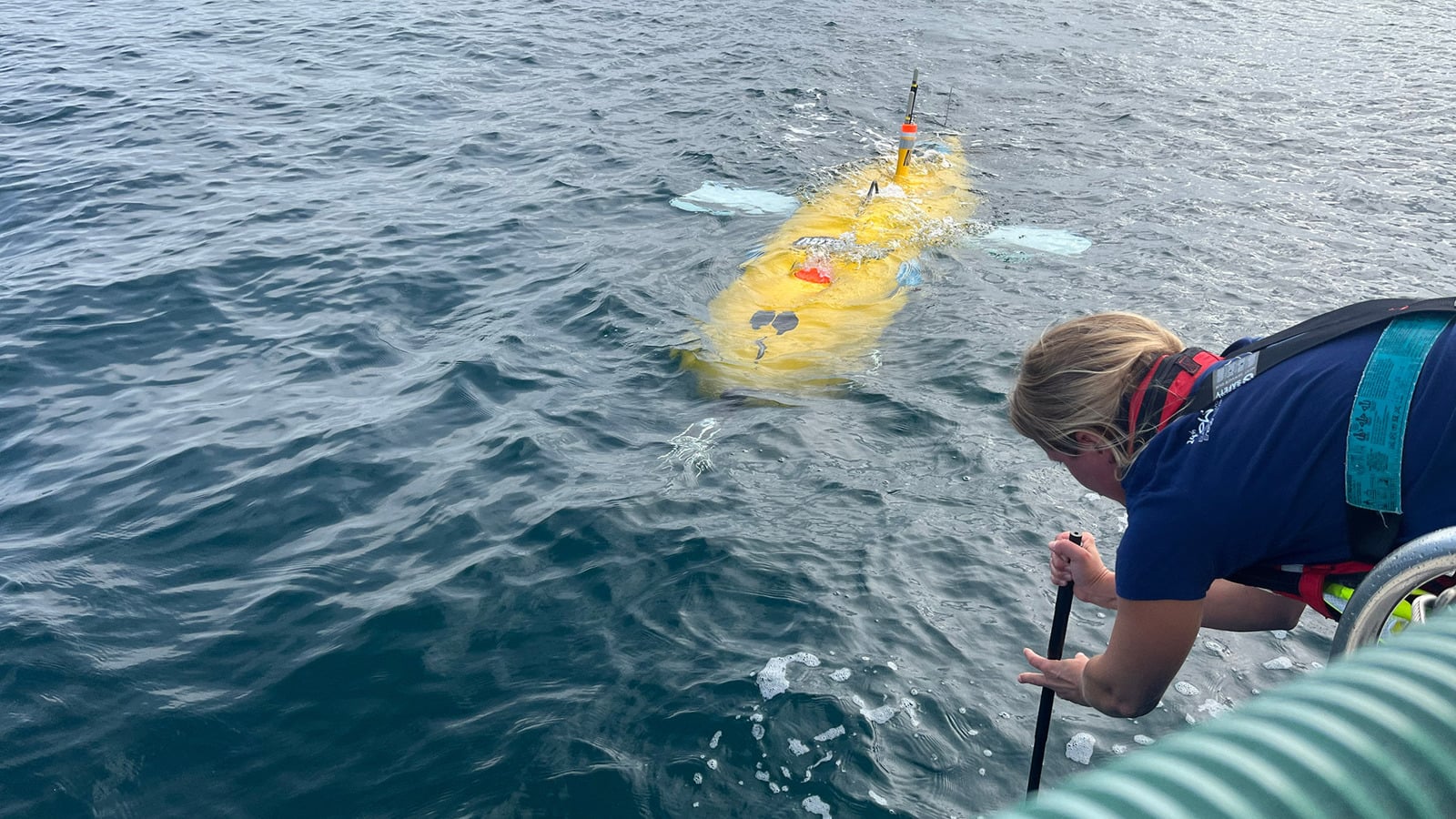
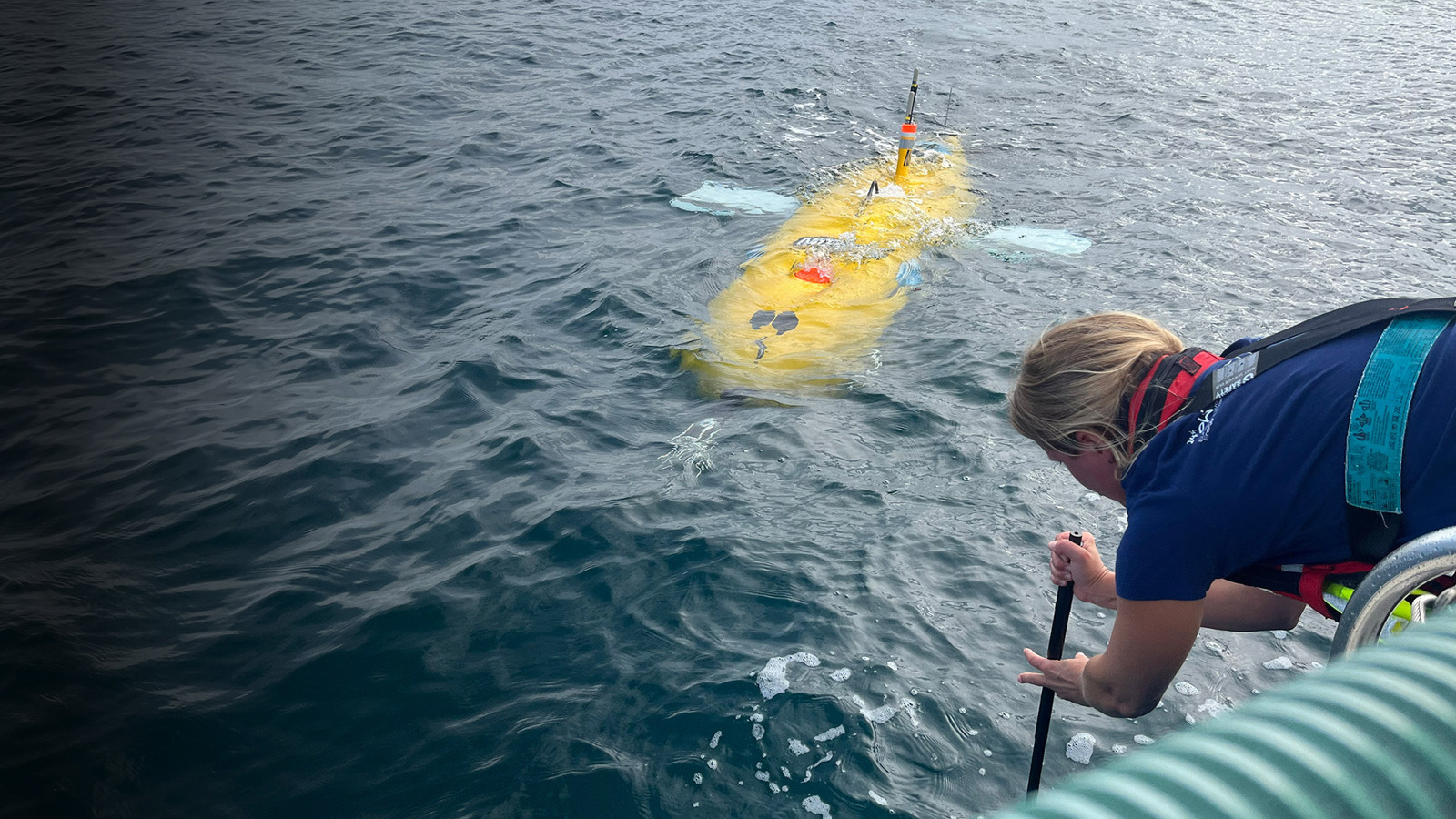
Dr Lilian Lieber and the ALR1500 during the two-week trial off the coast of Plymouth (Photo: Peter Miller)
KONGSBERG Ocean Science Product Advisor Robert Sørhagen joined the team in Plymouth, providing specialist expertise and support throughout the integration and trials. “This trial is a great example of what can be achieved when scientific expertise, autonomous technology and advanced ocean instrumentation come together,” Sørhagen said. “Working closely with the University of Plymouth and the National Oceanography Centre, we are bringing proven scientific echosounder technology to autonomous platforms and enabling new ways to study marine ecosystems.”

This trial is a great example of what can be achieved when scientific expertise, autonomous technology and advanced ocean instrumentation come together
Robert Sørhagen, Product Advisor Ocean Science, KONGSBERG
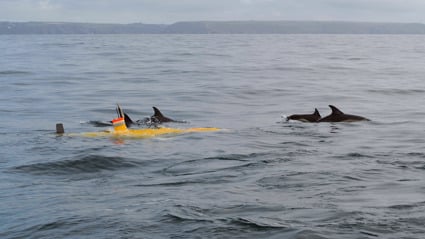
Combined with other onboard sensors, the EK80 was used to observe fish and zooplankton in the water column alongside measurements of the physical and biogeochemical conditions that influence their distribution. Early observations included a large fish school detected by the EK80, followed by a pod of common dolphins swimming alongside the AUV.

A pod of common dolphins swims alongside the National Oceanography Centre's ALR1500 vessel during trials off the coast of Plymouth, UK (Photo: Peter Miller)
Building a fuller picture of the ocean
The trial forms part of Frontline, a £3.5 million consortium within the UK's NERC ECOFlow programme. The project is exploring how ocean fronts influence marine ecosystems and how these dynamic environments could be affected by the expansion of floating offshore wind in the Celtic Sea.
By combining autonomous platforms with scientific echosounders, satellite observations, and other ocean monitoring technologies, researchers can collect complementary measurements over wider areas and for longer periods. The approach can help build the ecosystem understanding needed as offshore wind developments move into deeper and more complex marine environments.
For KONGSBERG, the collaboration reflects our ambition to support a sustainable ocean by bringing versatile scientific echosounder technology to new platforms and applications. Working closely with our customers at the University of Plymouth and the National Oceanography Centre also supports their transition towards autonomous platforms for future ecosystem assessments.
The trial is an important step towards more extensive scientific surveys planned in the Celtic Sea in 2027. It successfully demonstrates the wider potential of autonomous ocean observation for research in offshore wind regions across Europe and highlights the combination of space-borne and in situ observations to build a fuller picture of dynamic ocean features.
The Frontline collaboration brings together the University of Plymouth, Heriot-Watt University, Plymouth Marine Laboratory, the National Oceanography Centre, SINTEF Ocean, HiDef Aerial Surveying Ltd and KONGSBERG. The Plymouth trial was also supported by Turnchapel Wharf, Zero USV and Thales.
About the Frontline project
Frontline is investigating how floating offshore wind (FLOW) development could affect ocean fronts and marine biodiversity – from plankton to predators – in the Celtic Sea.
The project combines autonomous underwater vehicle (AUV) surveys, satellite remote sensing, aerial surveys, seabird tracking, fisheries data and stakeholder engagement to investigate how ocean fronts shape ecological processes and fishing activity across the Celtic Sea, and how these may change with the expansion of large-scale FLOW development.
The University of Plymouth is developing and applying new autonomous ocean-observing approaches that combine measurements of ocean physics with digital plankton imaging and acoustic sensing of fish schools to understand changes across wider ecosystem dynamics.
FRONTLINE will generate new evidence, best-practice guidance and advice to support offshore wind monitoring, marine spatial planning and nature recovery.
Related product
Learn more about the EK80 system