The story of EK scientific echo sounders begins more than half a century ago.

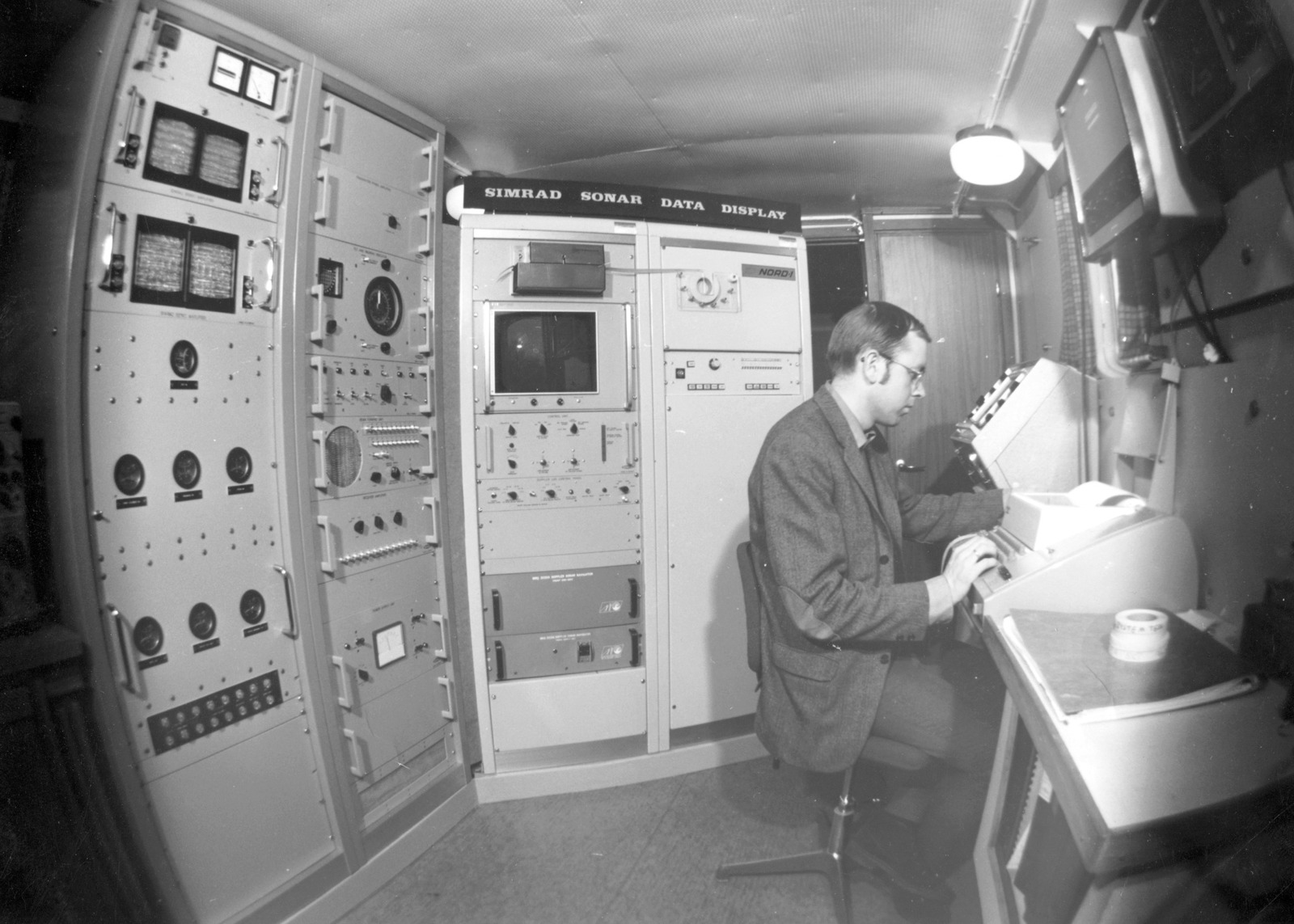
When ocean researchers relied on rugged electro-mechanical instruments that printed their findings on long rolls of paper.
The EK story

Echo sounding that evolved with the oceans

In the 1960s and 1970s, these early tools laid the foundation for what would become one of the most trusted names in marine science.
A breakthrough with split-beam technology

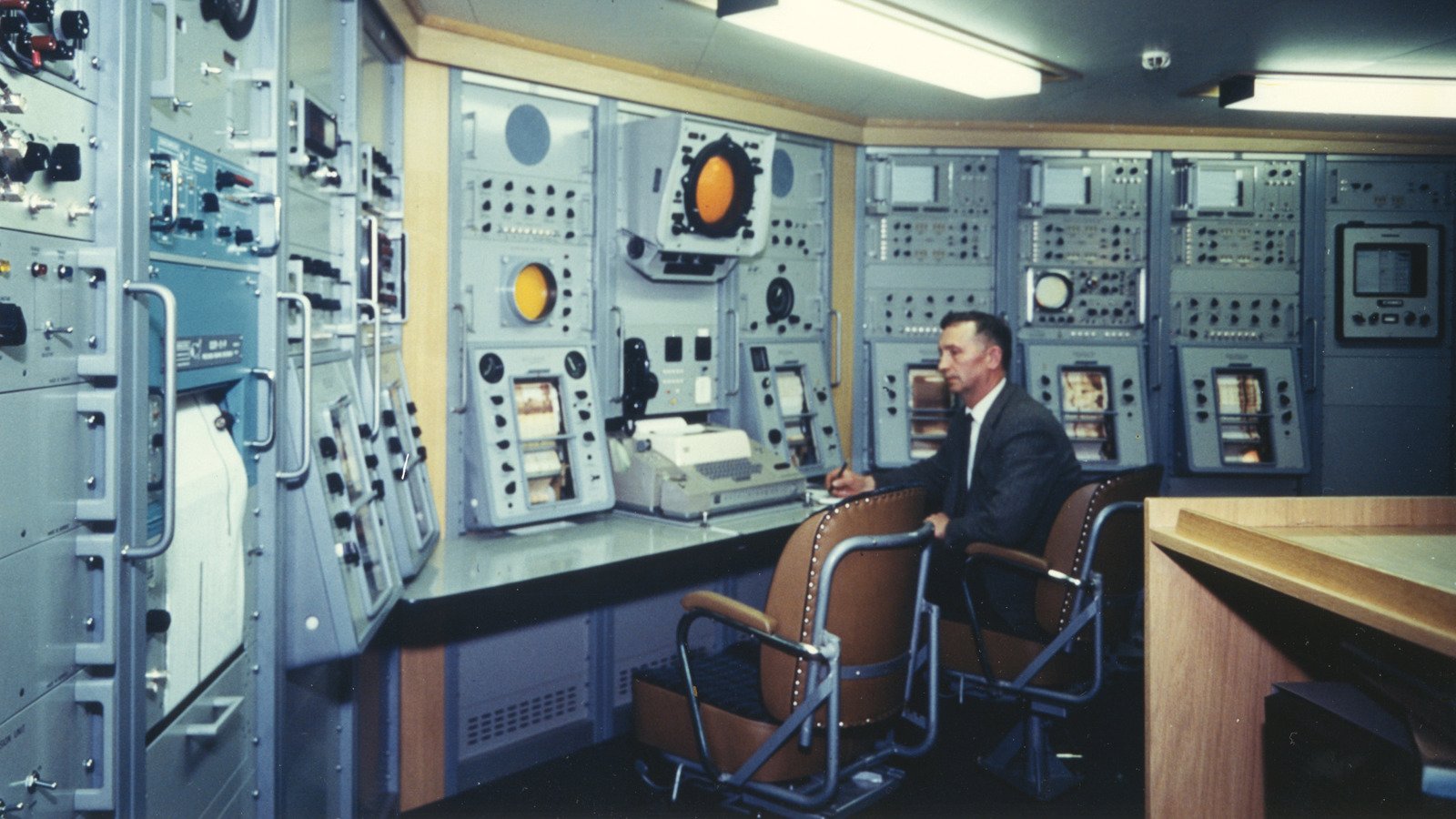
A major turning point came over 30 years ago with the arrival of the EK500. This system introduced split‑beam technology - an innovation that revolutionized quantitative fishery research and biomass estimation. For the first time, scientists could measure and understand the underwater world with unprecedented precision.


As computing technology accelerated, so did the EK line. In the late 1990s, the EK60 took the next leap forward by moving processing from specialized hardware to standard PCs. Running on the Windows operating system, the EK60 opened the door to more advanced signal processing, clearer resolution, and significantly improved calibration methods. Its broadened frequency range (18 to 333 kHz) expanded what scientists could measure, though the system was still limited to continuous wave pulses at fixed frequencies.

An instrument room with echo sounders printing on paper.
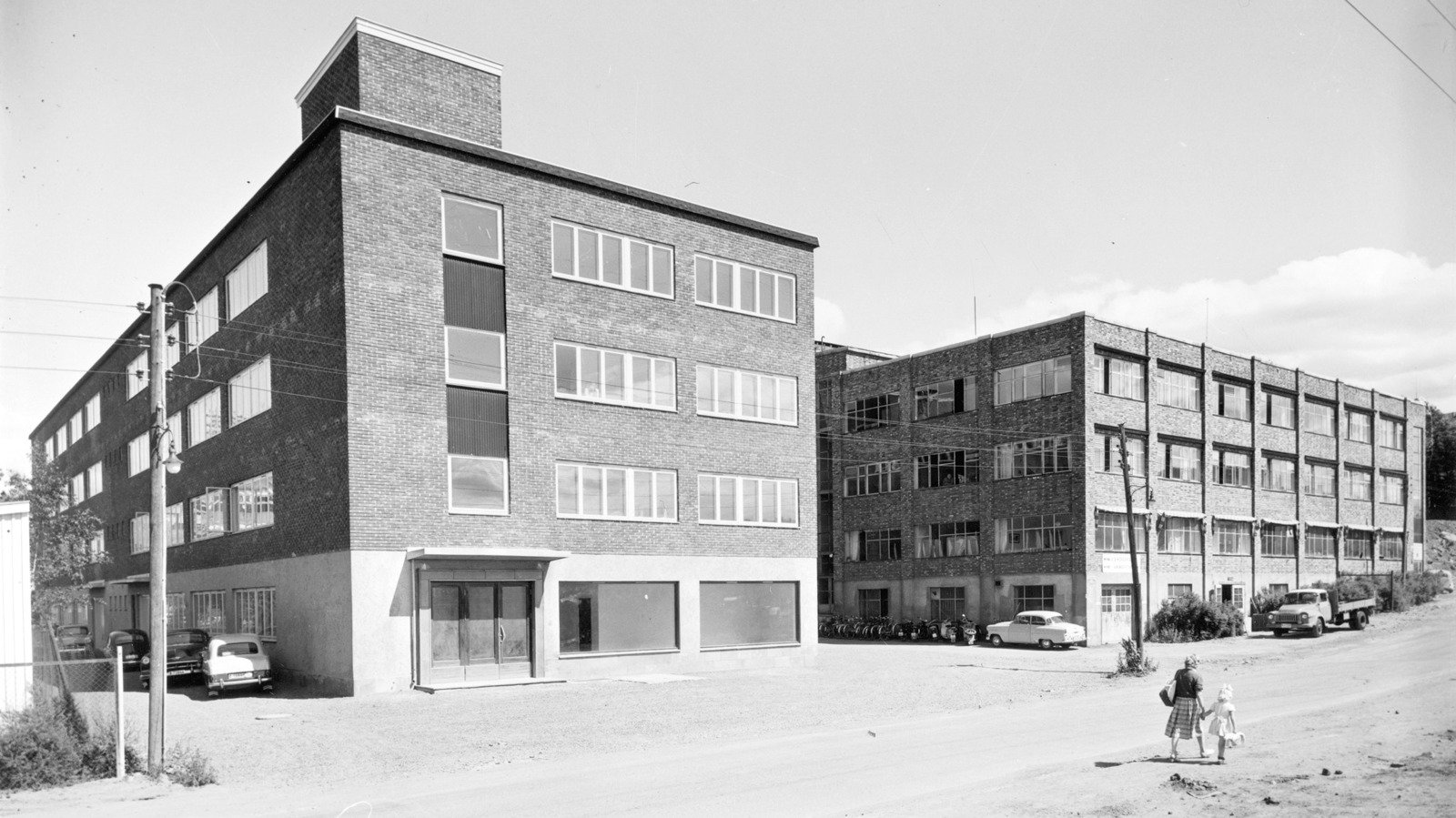
The headquarters of Simonsen Radio, 1961.
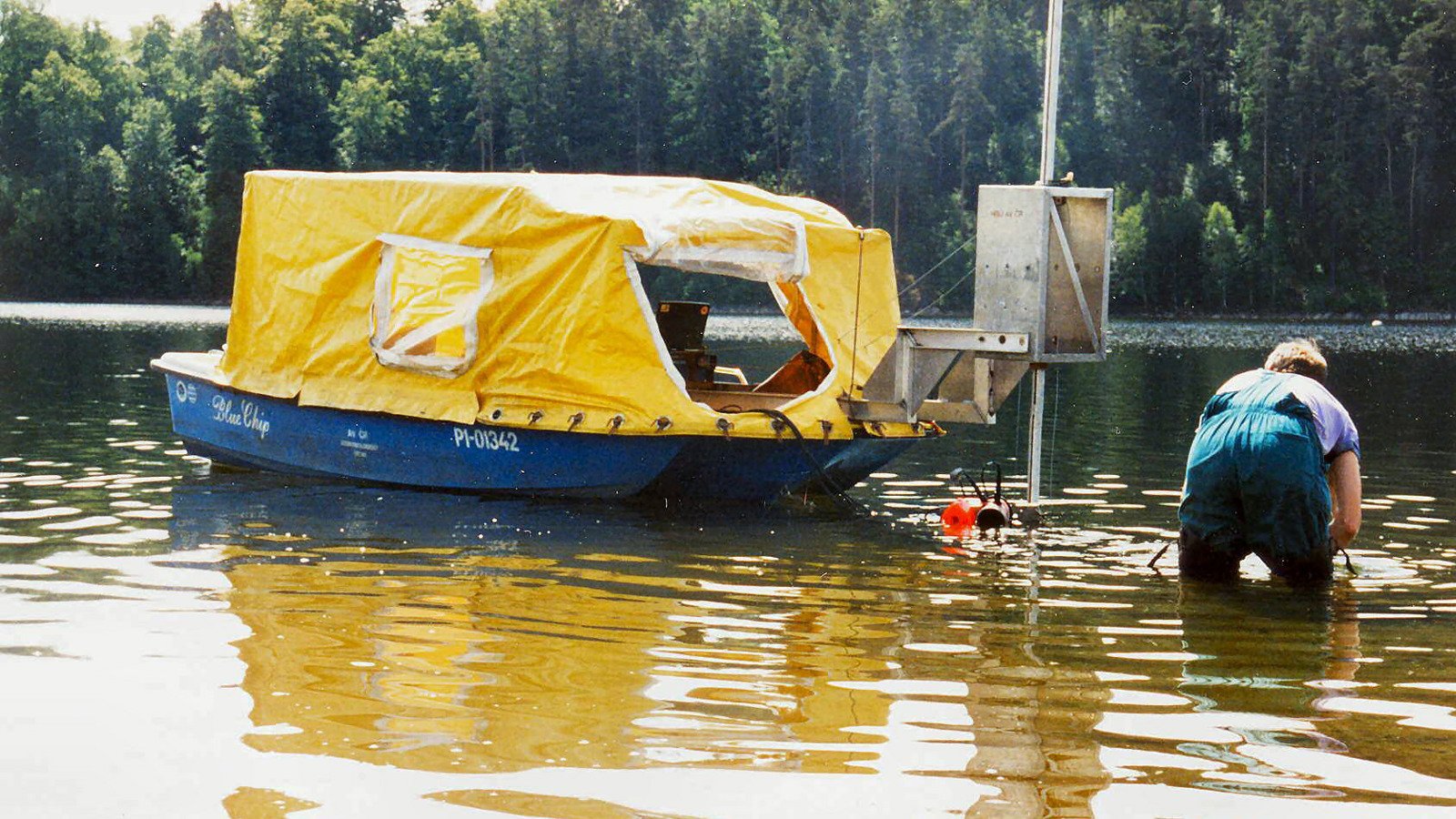
EK60 in action.
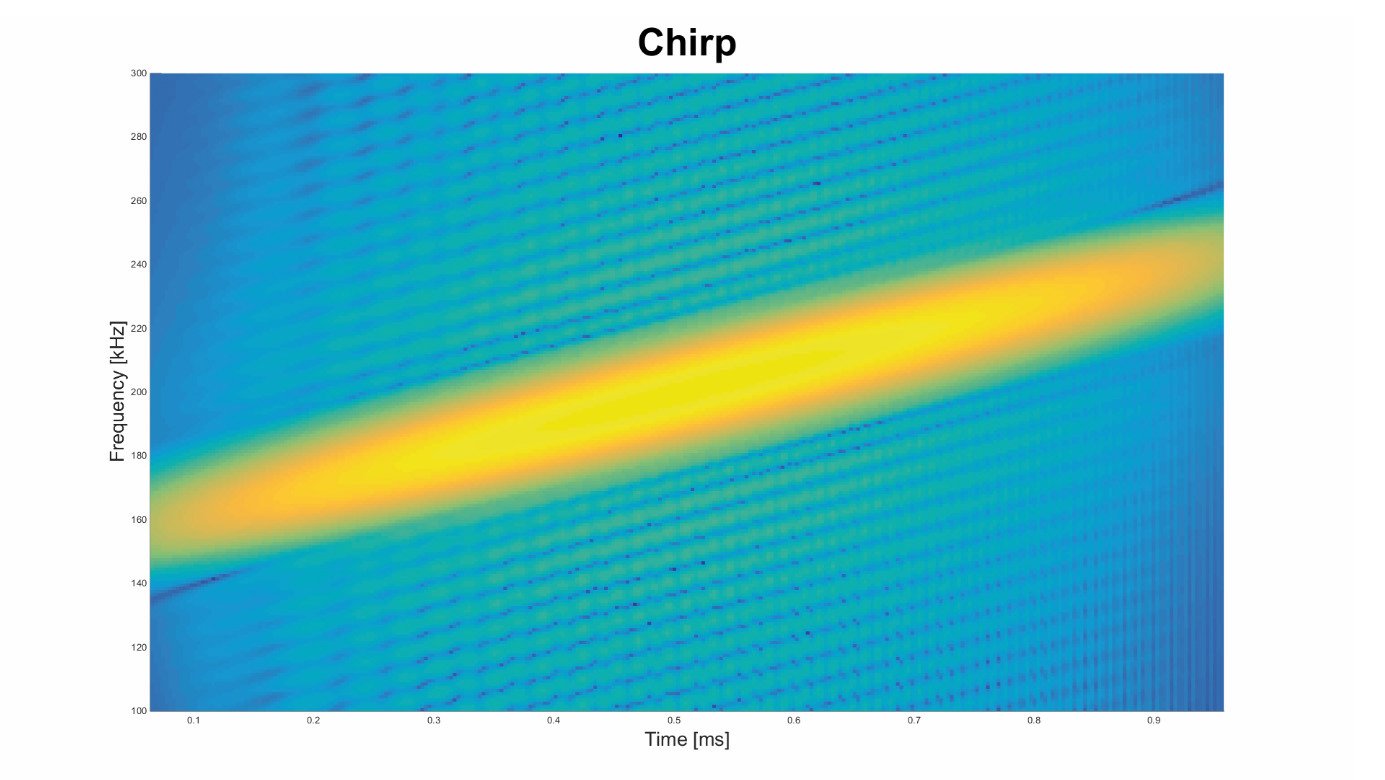
That changed again around 2015 with the launch of the EK80. At its core was the new Wideband Transceiver (WBT), which transformed the EK from single‑frequency systems into powerful wideband platforms. With the introduction of frequency sweeps (also known as chirps, or frequency modulation), the EK80 dramatically increased resolution and unlocked new layers of insight. Suddenly, the frequency response of each target became a source of information, and researchers began exploring advanced analytical methods, from enhanced classification techniques to modern machine‑learning approaches.

Expanding beyond research vessels

Historically, each EK generation had been built for large research vessels. But the WBT opened entirely new possibilities. The technology soon expanded into a family of transceivers designed for a far broader range of missions; mounted on the seabed, integrated into AUVs and USVs, or carried as portable systems. Some could even operate fully autonomously, gathering valuable data without anyone on board.

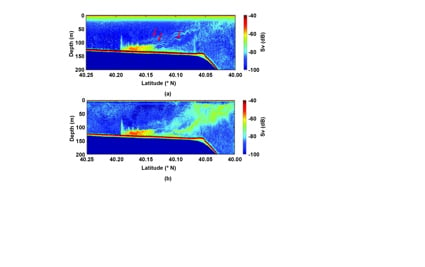
Echograms, or images of echo sounder data, from the EK80 Scientific Echo Sounders at the New England Shelf Break. The dark red line of the seafloor shows the gently sloping shelf suddenly dropping off at the slope, where the ocean becomes much deeper. Here, complex water masses come together to form a turbulent front. The red arrows point to lines of scattering from turbulence in the front. The large mass of scattering near the seafloor is from an aggregation of squid and mackerel. Echograms are shown for narrowband transducers, 18 kHz (a) and 38 kHz (b).
A broader family of ocean measurement tools

And the story continues to evolve. What started as a tool for understanding fish abundance and biomass has grown into a quantitative tool for studying diverse oceanographic phenomena; from biological studies of wide range of species, to gas and oil seeps, ocean turbulence, and physical oceanographic features such as thermohaline staircases .

Recently, scientists used the EK80 to map water masses in complex environments . The EK80 has also seen adoption outside of the academic realm as a tool for monitoring fluid intakes for power plants and assessing the health and behavior of fish in fish farms.

Since around 2020, the EK family has grown to include Acoustic Doppler Current Profilers (ADCPs)—some combining current profiling and echo sounding into a single, versatile instrument.

Today, the EK line reflects decades of innovation, guided by the needs of scientists who explore, protect, and understand the oceans. From paper charts to machine learning ready data, the journey has been one of continuous transformation - always pushing boundaries, always listening deeper.

A spectogram of a chirp or frequency modulation (FM).
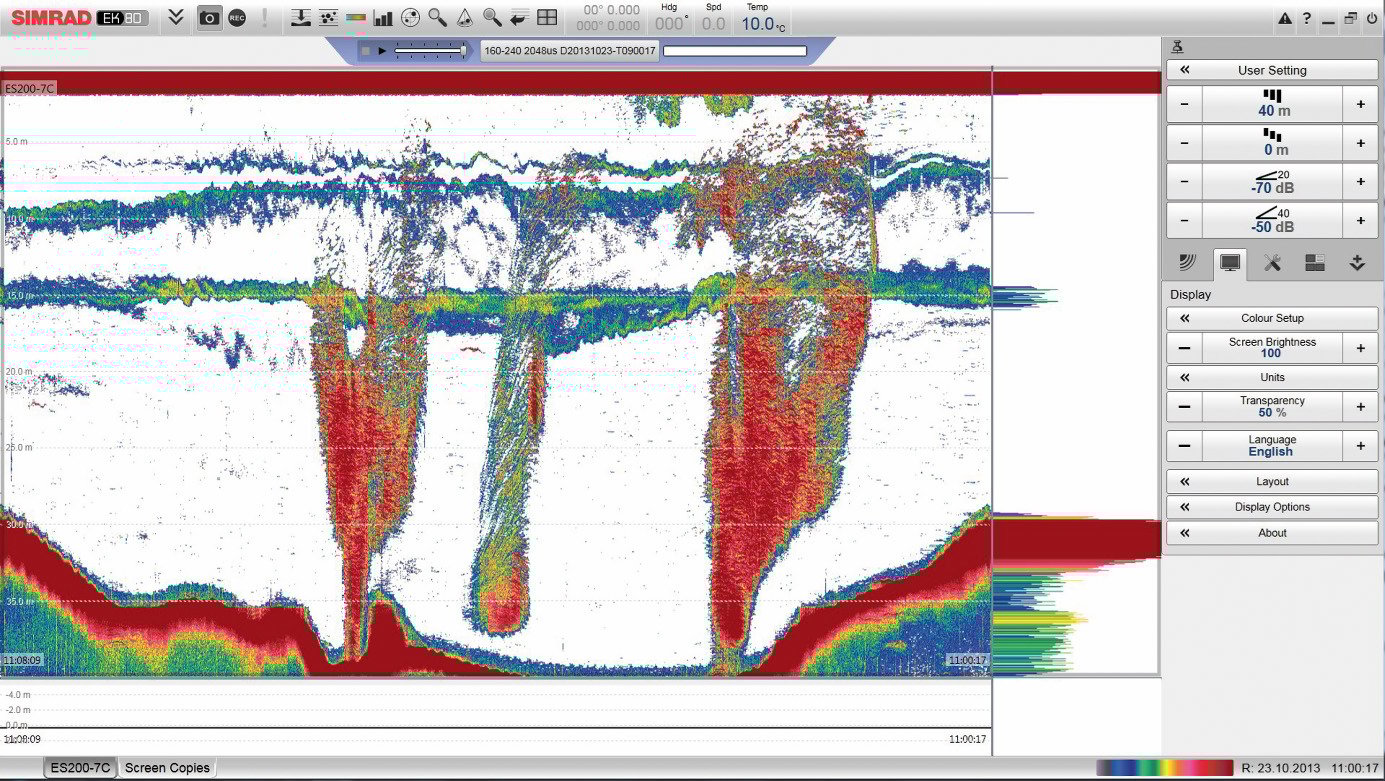
The EK80 software introduced in 2015.
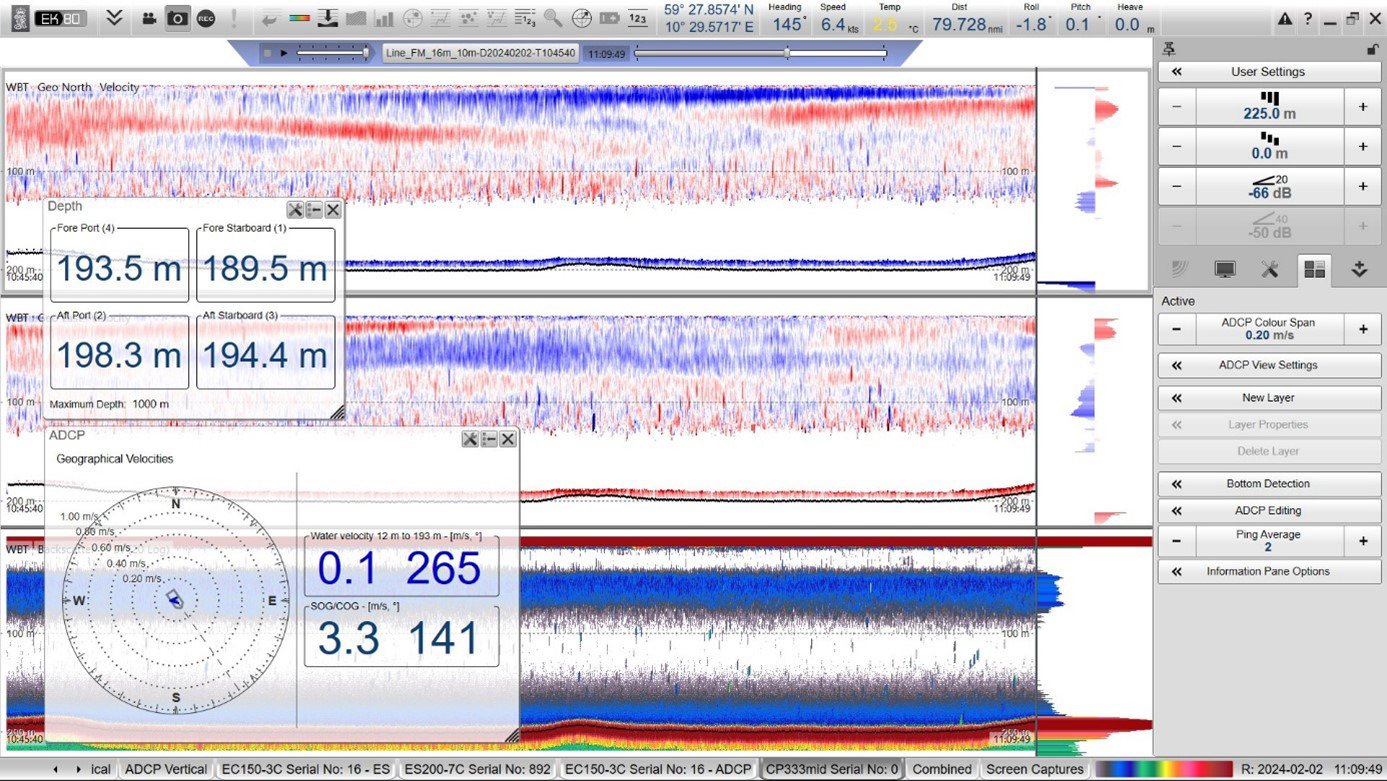
Data example of ADCP data collected and shown in EK80. The EK80 software operates the ADCPs simultaneously with the echo sounders.

EK scientific echo sounder

Learn more about our echo sounders and other instruments for ocean science.