Optimise maritime R&D with advanced simulation technology

Make better R&D decisions with high‑fidelity maritime simulation. Kongsberg Maritime’s simulator technology enables you to explore, test, and validate concepts in a safe, cost‑efficient virtual environment — long before real‑world execution. With decades of simulation expertise, we help organisations improve safety, sustainability, and operational performance across a wide range of maritime research and development projects.

Make confident R&D decisions 

The maritime industry is evolving rapidly, driven by digitalisation, increased safety requirements, and the need to reduce emissions. Simulation allows you to evaluate complex scenarios, test new ideas, and optimise operations without risk to people, assets, or the environment. Our high‑accuracy simulators are ideally suited for:

  • Feasibility studies and concept validation

  • Pre‑mission planning and operational analysis

  • Research projects spanning technology, operations, and human performance

Some examples of Simulation used for R&D:
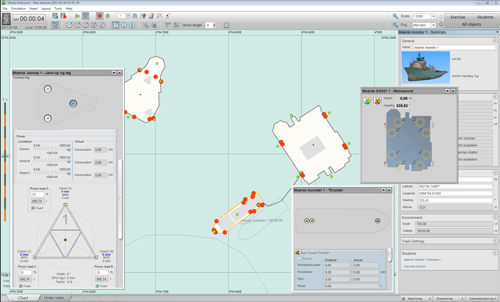
Safe testing and optimisation of demanding maritime operations

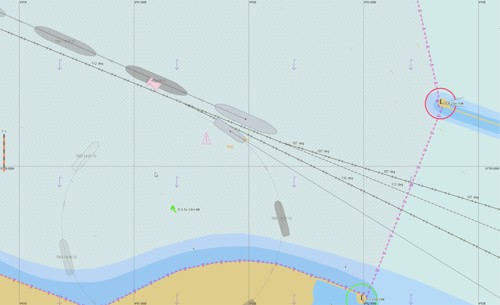
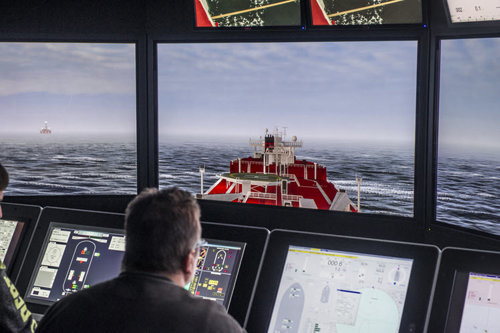
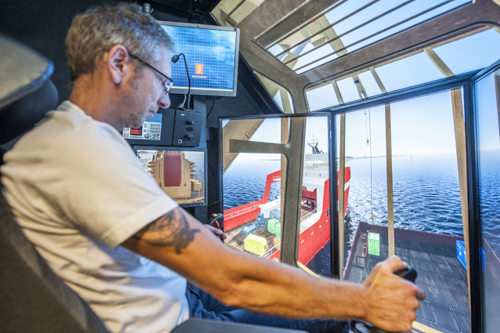
Use K‑Sim Navigation and K‑Sim Offshore to test, optimise, and verify marine operations in a controlled simulation environment. By analysing vessel behaviour across different weather conditions, sea states, and operational scenarios, operators and engineers can understand system behaviour, verify safety margins, define operational limits, and improve procedures — ensuring safer and more efficient execution before real‑world deployment.

Optimise fuel efficiency and reduse emission

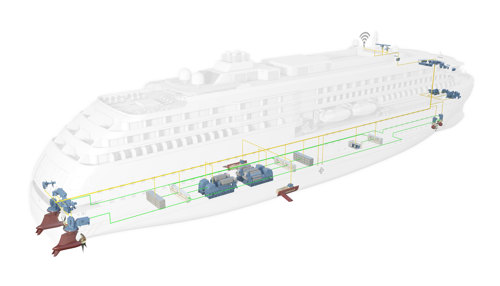
The K‑Sim Engine technology supports detailed research into vessel fuel consumption and emissions using realistic operational scenarios. Simulation helps evaluate fuel‑type selection, power management configurations, and machinery behaviour to support informed design and operational decisions. 

Simulation has also proven effective in operational optimisation. Studies using K‑Sim Navigation have improved fuel‑economic sailing practices, with one client achieving a 10% reduction in fuel consumption by training crews to operate more efficiently in the simulator.

Develop better ports and fairways  

Whether optimising or expanding an existing port, or developing a new one, port projects are often complex and financially demanding. Advanced K‑Sim simulation technology enables developers to test port and fairway designs in a realistic virtual environment and analyse how vessels operate in new or modified conditions.

By simulating ports, fairways, and vessel hydrodynamic effects together, project teams gain valuable insights early in the design phase helping reduce risk, save time, and avoid costly changes later in the project lifecycle.

 Facilitate “ship zero” studies and training  

Simulation enables full virtual prototyping of vessels — including bridge, engine room, and control systems. Crews can be trained and prepared before a vessel is delivered, while researchers can evaluate concepts that are impractical or unsafe to test in real life, such as advanced oil‑spill response scenarios.

Digital twins for data‑driven vessel optimisation

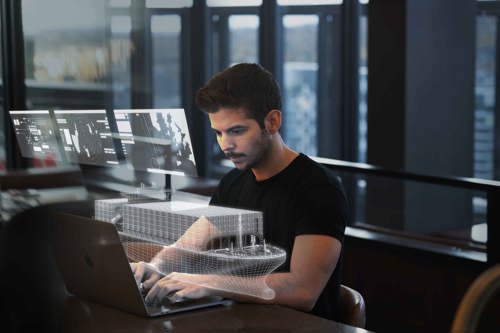
Use our simulation technology to create digital twin models of vessels or maritime projects to run simulated scenarios under varying operational conditions. The results can be benchmarked against real‑world data to calibrate models, optimise performance, and support real‑time decision‑making — for example in trim and power management studies.

Test and verify autonomous and remote vessel operations

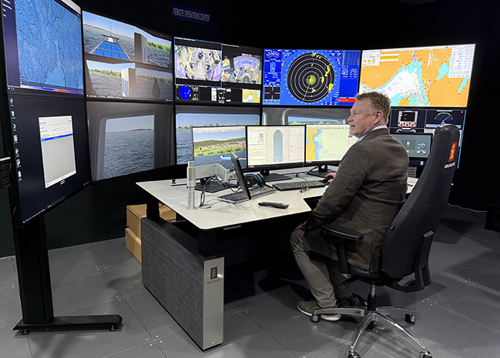
Simulation is essential for autonomous vessel R&D. K‑Sim enables virtual prototyping, testing of real control systems, and “what‑if” scenario analysis to assess operational possibilities and limitations and support decisions in autonomous operations. 
Simulators are also used to train remote‑control centre operators and support class approval processes.

Improve awareness of cyberattacks and resilience

K‑Sim simulators include functionality to support cybersecurity research and training. This includes simulating events such as GPS spoofing, helping crews and operators understand system impacts and develop effective responses.

Identify and reduce risk from human error

Human factors play a critical role in maritime safety. Simulation enables structured studies of operational and managerial performance by analysing situational awareness, decision‑ making, communication, workload, fatigue, stress, teamwork, and collaboration. These insights help organisations identify risk factors and reduce incidents caused by human error.

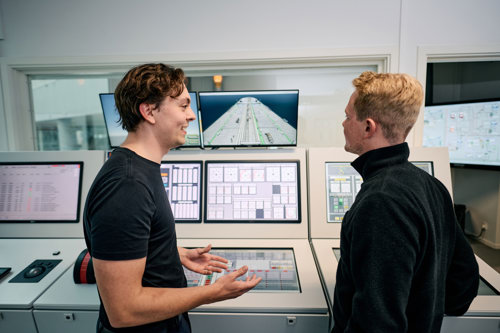
Simulation environments can be extended with tools such as eye‑tracking to support advanced research and are well suited for Human‑Machine Interface (HMI) studies, including bridge design and remote operation centres.

Learn more

Connect with our experts to learn how K‑Sim enables advanced research, testing, and validation