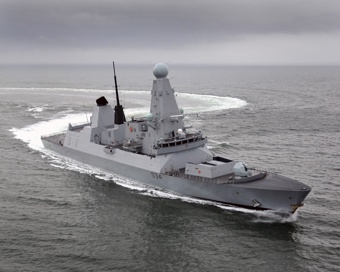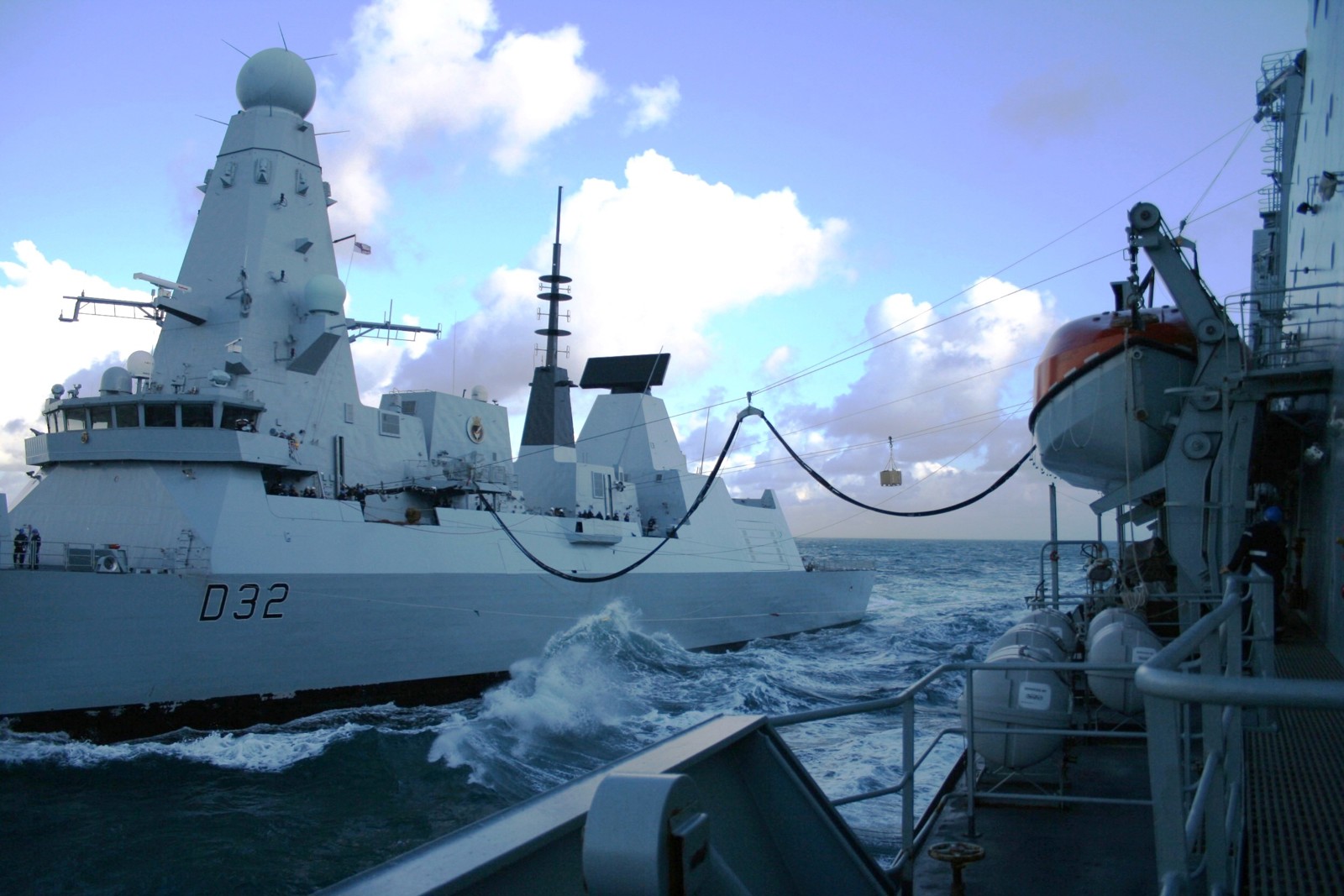
Two naval vessels side by side at sea using the replenishment at sea technology.
Delivering

Resupply goes global

Demand for replenishment-at-sea equipment is rising fast, with smaller navies entering the market and technical requirements growing. This is driving innovative design work within Kongsberg Maritime to make lighter, smaller and more cost-effective replenishment solutions.

  • Craig Taylor
    Senior Manager PR & Communications

The need for naval replenishment at sea (RAS) is growing rapidly – and Kongsberg Maritime’s RAS team at Gateshead in England is busier than ever. 
“Naval defence budgets are increasing and there are now greater requirements for RAS vessels,” says Chris Nelson, Kongsberg Maritime’s Naval Sales Director. “We’re seeing increased demand from all around the world and not just from traditional buyers of RAS equipment.”

Chris reports that the Gateshead team is expanding its roster of engineers to manage existing projects, while simultaneously driving new innovations in RAS engineering.

In May 2025, Kongsberg Maritime was named as the supplier of RAS/FAS equipment for two new Portuguese naval auxiliary oiler replenishment vessels. In December 2024, Kongsberg Maritime announced that it would supply complex RAS and FAS equipment for five large Fleet Solids Support (FSS) ships for the Indian Navy.  The Indian FSS vessels, each displacing 43,500 tonnes, will bolster the blue water capabilities of the Indian Navy and be equipped for humanitarian and disaster relief missions. The RAS equipment will include electric winches, an astern refuelling rig, RAS masts and the ancillary equipment that will connect the FSS ships with other vessels during replenishment operations.

The growing demand for RAS equipment has been driven by a set of connected factors. First, navies are trying to extend the range of their vessels, including smaller navies that may not have been considered ‘blue water’. The prospect of sustained, high-intensity operational deployment puts further demand on RAS requirements, particularly for fuel and munitions. 

Cost savings are another crucial factor. An investment in highly capable supply ships can allow the same number of combat vessels to patrol a wider area, project power over greater distances or stay on location for longer. That helps reduce crew demands, which is vital as naval recruitment efforts struggle. Vessels that need to resupply in harbour rather than at sea must also go in and out of port, adding to the cost of naval operations. 

“Anything that we can do in the technology area that requires fewer people, be that in maintenance upkeep or operation, navies will be grateful for that,” says Chris. 
The year following the spread of Covid-19 saw a big jump in orders for RAS equipment and demand has continued to rise since then, adds Chris. The team at Gateshead has received increased investment and has reorganised to help scale growth and enhance R&D work.

Kongsberg Maritime has recruited Gary Michael, an experienced naval engineer and shipyard leader, as its new Vice President, Naval. He is helping the Gateshead team scale up activities. “I've spent the last 10 years working for shipyards, so when I talk to customers, I understand their challenges,” Gary says. “I know the shipbuilding sequence and I can help the team understand that as well.” 

Gary identifies the introduction of permanent magnet (PM) motors as just one important way that Kongsberg Maritime has worked to bring down costs, while reducing installed weight and raising performance on RAS equipment. He credits the rise in electric vehicles in the automotive sector with helping make PM motors cost-effective. 

A profile photo of Gary Michael, the Vice President of Naval for Kongsberg Maritime.

We are the only RAS supplier that can provide a fully electric system. We are market leaders in this space and by continuing to design and develop our equipment, we maintain that competitive edge. That also bodes well for navies needing to extend their operations in the high Arctic, where electrical RAS equipment works better than hydraulic equipment.

Gary Michael, VP Naval, Kongsberg Maritime

In the 1980s, Kongsberg Maritime pioneered the development of electrically operated RAS equipment. As a result, the company can develop new equipment faster. However, progress doesn’t stop there.

Electrical RAS systems require less in-service maintenance, have increased reliability, improved dynamic performance and can be installed onboard in less time during build.

Gary points to a new focus on fast deliveries and full life cycle support. He is keen to bring in more proven deck machinery and handling equipment from the commercial side of Kongsberg Maritime and prepare it for naval use. “There’s a lot going on in the RAS market and there’s a lot more to come from us to answer the future needs of the naval market,” he adds.