How simulation drives sustainable maritime transportation and IMO compliance
Maritime industry faces increasing pressure to reduce emissions and operate more sustainably. A study from Kalmar Maritime Academy at Linnaeus University shows that simulator-based training significantly improves fuel efficiency and reduces CO₂ emissions—helping operators meet stringent environmental regulations.
-
Anne VoithSenior Marketing and Communication Manager - Simulation
IMO regulations: A turning point for shipping
The International Maritime Organization (IMO) has introduced strict requirements to cut carbon emissions. One key measure is the Carbon Intensity Indicator (CII), which ranks vessels from A to E based on annual CO₂ emissions. Poorly rated vessels risk higher fees and restricted port access, making emission reduction critical for long-term competitiveness.
University research confirms positive impact
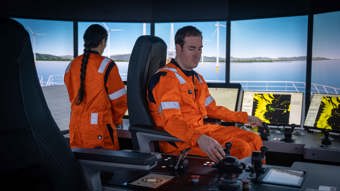
Linnaeus University’s report highlights that simulator training delivers measurable fuel savings. Using Kongsberg Maritime's simulators for over 40 years, the academy integrates Bridge Resource Management (BRM) and Engine Room Resource Management (ERM) into its Master Mariner program. Students receive real-time feedback on fuel consumption, supported by connected bridge and engine room simulators for precise measurement.
Key results:
- Reports from several projects where employees from different parts of the shipping industry participated conclude huge positive results in fuel savings and emission reduction.
Road ferries cut emissions by 11,000 tons
Since 2015, Linnaeus University has partnered with the Swedish Transport Agency to deliver Eco-driving courses for all their road ferry crew members. More than 400 crew members have completed training, achieving:
- 1.5 litres less fuel consumption per trip
- Estimated in total €2.5 million annual savings
- 11,000 tons CO₂ reduction each year
Passenger ferries achieve 13% fuel savings
Captains operating small passenger ferries in the Stockholm archipelago now complete mandatory Eco-driving courses combining theory and simulator exercises. Findings show:
- Up to 13% fuel savings
- Improved manoeuvring and operational behaviour across all participants

Our research confirms that simulator-based Eco-driving training consistently delivers fuel savings and emission reductions. With more than 700 hundreds captains and officers trained, the results are clear—this method will be essential for the industry’s sustainable future.- Jan Snøberg, Senior Lecturer, Linnaeus University, Sweden
Conclusion: Simulation as a sustainability enabler
As the maritime sector adapts to stricter environmental standards, simulation technology offers a proven, practical solution. By combining advanced training with measurable outcomes, shipping companies can reduce emissions, cut costs, and secure compliance with the IMO regulations.
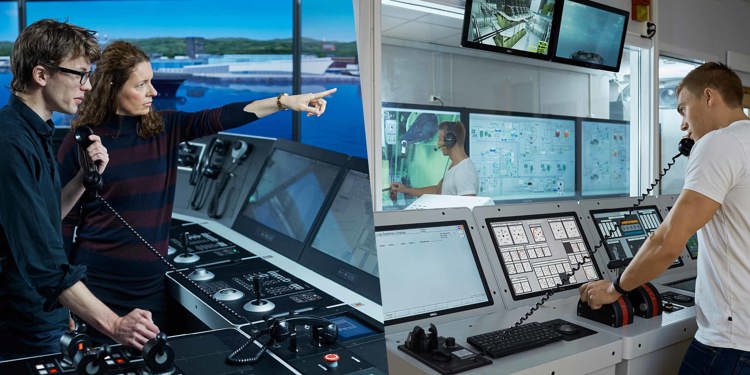
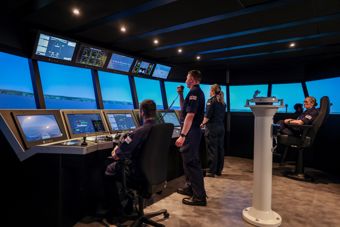
By connecting the K-Sim ship’s bridge and engine room simulators it is possible to provide fuel consumption studies.