60 Years of Azimuth Thruster Innovation: How Kongsberg Maritime Transformed Vessel Propulsion
For six decades, Kongsberg Maritime has advanced azimuth thruster technology—transforming vessel manoeuvrability, efficiency, and sustainability. From pioneering designs in the 1960s to today’s high-performance solutions for offshore, ice-class, and cruise applications, innovation continues to drive progress.
-
Craig TaylorSenior Manager PR & Communications
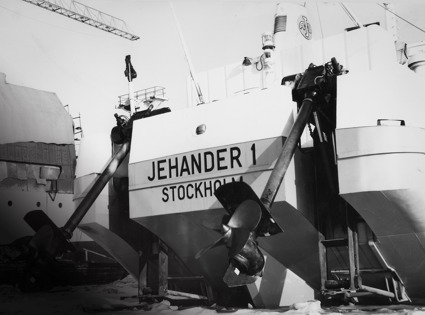
The technology around azimuth thrusters has developed since the early years.

Juha Pekka Vesa Product manager – Thruster SystemsIn a way, things have changed more in the last 10 years than they ever have. The focus on electrification, environmental values, sustainability – these kinds of things – has really rocketed in the past decade.
The power rating for a given thruster size – the amount of power that can be ‘pushed through’ a thruster – is also rising rapidly. “Basically, from the same amount of steel, we get about 30 per cent better output today compared with what it used to be,” says Tommi.
“As we say in engineering, the amount of steel times intelligence is a constant. So, the more intelligent you are, the less steel you need,” Juha-Pekka says. “That means you can push a lot more power through the equipment if you make it intelligently.”
Achieving such targets has required a continuous process of innovation over decades, thanks to Kongsberg Maritime’s engineering teams and in-house Hydrodynamic Research Centre, in Kristinehamn, Sweden.